What would happen if we switched off the internet?
T3 investigates the potential of a world wide web lock-down

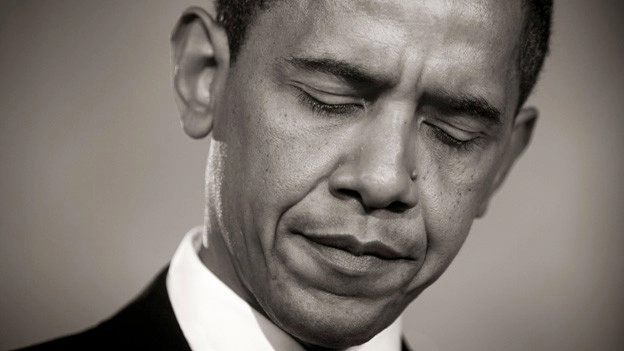
As Wikipedia looks set to join a web blackout in protest against anti-piracy laws in the US, we ask the question: What if the internet was switched off?
“My fellow Americans. Following the Chinese cyber attacks last week on over 20 of our Fortune 100 corporations, I have no option but to make use of the provisions laid out in the Protection of Cyberspace as a National Asset bill of 2010. As of midnight tonight, all nonessential access to the World Wide Web in the United States and its allied countries, including Britain, will be suspended.”
Imagine waking up one morning to discover you have no new emails, updates or tweets on your smartphone. Then, when you search for today's news on your laptop, all you get is a pop-up sign, saying: 'You are not connected to the Internet.' After irritatedly turning your modem off and back on again, you're still getting no connection. Then you realise you can't get onto the web via your mobile's 3G either. Finally you give up and revert to old media. Switching on the TV you see a recording of the President of the United States making the above speech the previous evening. That's when you really choke on your cornflakes…
The perfect online storm
What would you do if some catastrophic event, be it a massive cyber-attack, Presidential edict or natural disaster, brought down the web? For many, it's like asking what they'd do without electricity and gas or their car.
A recent Organisation of Economic Co-operation and Development (OECD) report warned of the dangers of a cyber-attack “perfect storm” where an attack or natural disaster in the real world was made infinitely worse by a simultaneous assault on a country's online infrastructure. However, it also stated that cyber-attacks in themselves were unlikely to cause the system to collapse – just individual websites.
It is only governments, then, who have the power to interfere with – or even completely turn off – the web in their own countries.
In Egypt, we've seen the beleaguered Mubarak administration deny web access to its citizens. This was not done by any clever, viral methods, but by telling the country's internet service providers to stop providing internet services. Simples.
Get all the latest news, reviews, deals and buying guides on gorgeous tech, home and active products from the T3 experts
As Bill Gates told American reporter Katie Couric at the time: “It's not that hard to shut the internet down if you have military power where you can tell people that's what's going to happen.
“Whenever you do something extraordinary like that you're sort of showing people you're afraid of the truth getting out, so it's a very difficult tactic, but it can certainly be shut off.”
In a democracy, such an action would be far harder. This would not be for technological reasons, but because the government would be wide open to massive lawsuits from those whose businesses suffer or perish as a result of a deliberate web shutdown. Panicked overseas investors would also surely run for the door.
Such a scenario is unlikely then, but not impossible. The US remains the number one target for cyber terrorism. It naturally wants to keep its electronic frontiers secure. Wikileaks – just about the most primitive form of cyber attack one could imagine – has caused outrage over there. If the alternative is having its security compromised, could the US be willing to relax its commitment to free speech and free trade and “switch off” the web?
Last year, rogue Democrat Joe Lieberman proposed a bill that would give the President power to shut down or take control of certain aspects of the internet in times of national emergency. The 197-page Protecting Cyberspace as a National Asset bill would give Barack Obama access to a so-called internet killswitch if the nation came under a serious cyber-attack.
Joshua Gruenspecht of the lobby group the Campaign for Democracy in Technology says the US Government's recent subpoena of Twitter for access to Wikileaks' account is a sign that the powers that be wish to exert more control over cyberspace.
“We're going to see on-going touchy issues like this Wikileaks and Twitter story that demonstrate that the protections that we have right now are not as strong as they ought to be,” he says.
“The FBI has put forward a suggestion that companies should be required to design their websites so as to make it easier for US law enforcement to access. They want to effectively be able to digitally wiretap things like Gmail, Skype and Facebook.”
However, Gruenspecht concedes that the US's constitution and laws mean this would not be a pushover.
“There will be some tension between government security needs on one side and economic needs on the other. I think we're going to continue to see a pushing and pulling dynamic.”
Keys to the internet
Here's a reassuring thought: though there are ways people in individual nations can be forced off the web – ISPs being forcibly told to cease operations being the most obvious – to simply “turn off” the web as a whole is all but impossible.
Bruce Weber, professor of information management, management science and operations at the London School of Economics, says: “A scenario such as loss of internet services is nearly impossible due to the design of the internet, which relies on a highly decentralised, packet-switching logic to move data from one place to another. The loss of capacity in one part of the internet is handed by routing packets over longer but available links to the designation.”
In the event of a devastating cyber-attack on the DNS servers that ensure you go to the right website when you type in a URL, Paul Kane is one of six men across the globe that has the power to come to the rescue and restore the infrastructure.
The UK-based entrepreneur, who runs the Communications DNS internet security firm, is a Recovery Key Shareholder. If duty calls, he and five other members of the Domain Name Systems Security Extensions (DNSSEC) committee will be transported to a secret location in order to produce part of an encryption key to renew the system. He's also pretty sure that the internet is going nowhere, calling a large-scale outage “very unlikely”.
“The design of the internet is very robust and resilient to any one element failing,” says Kane. “The whole is much greater than the sum of the component parts. In this industry one can never say never, but there are many safety mechanisms in place to try and mitigate any service disruption. If it was a deliberate act, the perpetrators of such acts would probably be tracked down and caught.
“You will understand I can't go into detail, but rest assured that there are people, processes, equipment and technologies working to ensure the 'e-world' operates smoothly.” So turning off the internet like a tap is not easy. Oceanic cables which carry our connections under the big blue have been broken by earthquakes, but they can be bypassed, then repaired. Denial of service attacks have succeeded, but are by nature too localised and short-lived to cause serious concern.
Detonating nuclear devices around the world would do it. In that case, the electromagnetic pulse of the explosions would fry everything electronic. But not being able to fire up Safari on your iPhone would be pretty low on your list of worries under those circumstances.
Life Without the Internet
That's just as well, because for most of us in the developed world, living without the internet now seems unthinkable. Without Facebook, online gaming, email and all the other connected services we now take for granted, life would be, if not impossible, then certainly very different.
Editor of the Journal of Media Psychology Dr Stuart Fischoff thinks that on an individual level, there'd be an intense period of mourning that the constantly connected would have to endure before getting their lives back on track.
“For many people it would take a lot of adapting as their life has beenreally encrusted around this technology,” he says. “It would be a really profound loss – a bit like what happens to a family when the mother dies. Everything gets disrupted and is suddenly up for grabs and people have to run around doing everything she did. If you take all of these rituals out of a person's life, you'd really have to work hard to rebuild it.”
Do you get anxious just thinking of a weekend out of broadband range? Stressed out by slow, unreliable Wi-Fi connections? Hit F5 constantly when Twitter is over capacity? Join the club.
“However, the systems at the core of markets and banking networks are not open, public networks, but proprietary, private networks with significant physical controls and security mechanisms for protection.”
Hillary Cash runs the REstart addiction clinic, 13 miles from Microsoft's HQ in Redmond, California. She's been dealing with tech-addicted young adults for nigh on two decades: “Back then it was a trickle, right now it's a flood,” she says. At her clinic, in-patients have virtually no access to digital technology for 45 days in an attempt to wean them off the web.
Cash's clients are not in as small a minority as you might think. A 2010 study suggests that seven per cent of Chinese elementary and middle school children are “addicted” to the internet (Leui et al) and as far back as 2005, 18 per cent of British students were considered to be pathological internet users (Niemz et al).
What kind of an aftermath would we see in 2011 were the web to fail? “I think you'd have a major freak-out all around the globe with people being thrown into withdrawal, and they'd panic,” says Cash. “People would be feeling anxious, depressed, angry and restless. They wouldn't be sleeping well and would be very irritable.”
However, she doesn't think this would lead to suicidal behaviour. In her opinion, internet addiction is more like sex addiction than being an alcoholic or hooked on heroin.
“Let's say you're an adult who's spent their entire life in front of a screen. You might be very anxious and hide away for a long time before you're ready to be in the world, but in the end people would figure it out. After about three weeks they'd calm down, and their brains would start working on how to get on with life.”
Journal of Media Psychology's Dr Fischoff doesn't subscribe to the idea of “internet addiction” per se. His feeling is that the net is just an enabler for more traditional addictive behaviour.
“It isn't so much that people are addicted to the internet,” he tells us. “They are addicted to the gifts of the internet. They need constant stimulus input, and without it people will skip to other types of addiction that are not net-dependent, be it sex or gambling, that are available offline.
Dr Fischoff says that one of the main things that has us checking Facebook every 15 minutes is the arguably illusory feeling of self-worth offered by online friends and followers.
A recent study showed that those with narcissistic tendencies and also those with low self-esteem were more inclined to check their Facebook pages more often. Without Facebook and other social-networking sites offering regular ego boosts, people could struggle.
“People need feedback, they need more affirmation that they are friendly and worthy of knowing,” Fischoff says. “What Facebook does is to exploit this weakness that exists in social animals such as ourselves.
“I think that losing Facebook would initially be a problem for some individuals. But they would discover other ways to find self-worth. I think the desire to talk, socialise and get reflections back about what you're saying – the looking glass self theory – says we know ourselves by how people look back at us.”
The War Effect
In the event of a web collapse, one group who would be facing a more serious worry than whether or not their followers were responding favourably to their Tweets would be members of the armed forces.
PW Singer, author of Wired for War – The Robotics Revolution and 21st Century Warfare, warns that any interruption to either service would severely limit the operational capacities of military units.
“Operationally in Afghanistan, for example, units are defi nitely reliant on the SIPRNet [Secret Internet Protocol Router Network – the US military's own classified communications network] for communications and intelligence data,” he says. “Without it, you would have units yelling, 'Where's my intelligence, I'm about to go into this village in Afghanistan.' There would be mass chaos. Not complete inability but definitely hindered ability to operate.”
The US Defence Department operates 15,000 separate different computer networks and 4,000 installations in 88 countries. Many of those are civilian and interestingly, while the SIPRNet holds the key to mission information, an interruption to public internet networks could cause far worse problems for the military.
“There are portions of the regular internet that underpin these operations,” Singer says. “Logistically, forces deal with commercial companies who get the soldiers everything from their ammunition to the food that they eat.”
A drop in service would not render us impotent, however. The means of deploying weapons would not be seriously affected. “Most of our launch capacity is not tied up in SIPRNet,” says Singer. “You've got 15,000 military networks out there. If I'm able to crack into SIPRNet, it doesn't mean that I'm able to crack into a ship's missile system.”
There have been glitches, though. Early in 2010 a routine software update resulted in an error that meant 10,000 GPS receivers – there are 800,000 US Military receivers attached to everything from aircraft carriers to individual bombs – were unable to log on to the network, making them impossible to track.
Technical failures to our internet connections aren't really what defence departments around the globe are worried about; it's the threat of the enemy getting inside our communications tools and changing the information within them that has the generals worried. “That could defi nitely have a worse effect,” says Singer. “Imagine if a hacker were able to change the data of a GPS target, to add three degrees to every 20th one. The resulting carnage would lead people to lose faith in the use of GPS.
“The concern is not so much the system going down, but reaching the point where it becomes unreliable. If a system goes down, we can reconstitute it, but once the trust in that system has gone, it's very difficult to get it back and that's a much bigger risk and, indeed, easier for adversaries to carry out.”
If we were to ever revert to non-net dependent defence systems, would armed forces just be able to regress back to methods that worked in the past? Mr Singer, who co-ordinated the defence policy task force for Barack Obama's presidential campaign, is in two minds.
“Would it mean you immediately go back to the same style or are you now so dependent on modern methods that you're unable to operate? Perhaps now we're more sophisticated we'd know how to use the older technology better. “Imagine if GPS disappears. I was able to get from point A to point B without GPS. But what about the generation that has grown up with it? How about that soldier in the fi eld that has always had GPS telling him where he is? If he's forced to go back to using 1960-level methods, he may not be able to operate.”
Wall Street Crash 2.0
A breakdown of internet services could also have serious ramifications for the West's already floundering economies. For retail, for infrastructure and for jobs it would be disastrous. You can imagine the carnage. “The whole concept is almost catastrophic,” media psychologist Dr Fischoff tells us. “If you take out one piece of the puzzle, the entire puzzle falls apart.”
Could banks and stock exchanges around the world survive continued denial of internet service without the financial world falling into disarray? Would our savings be safe from the black hole created by any outage? Professor Bruce Weber of the London School of Economics says it's natural to be concerned.
“A famous US banker, Walter Wriston, once said, 'Information about money is more important than money itself,'” he says. “The internet has made information about money flow faster to more people than previously thought possible. With such importance placed on financial information flows, it is natural to ask whether there is a dangerous level of dependence on technologies that are not infallible.
For consumers, it seems that the inconvenience of waiting in long lines for customer services on the telephone and having to transfer money though online banking portals would be the height of the inconvenience. We might have to wait a little longer for service, but our mortgages, savings, credit cards and loans are all safely locked up behind impregnable firewalls. Again, that infrastructure is safe. Uday Karmarkar, director of UCLA's Business and Information Technologies project, also thinks there is no reason to be concerned that our bank balances will suddenly be wiped out due to an outage.
“The question of whether financial institutions should use the internet is isomorphic to asking whether a security truck company use the public roads,” he says. “It can be a risk, but apart from a direct attack from armed forces, the breakdowns are very limited.
“If someone could destroy all of the records of who has money, that would be a serious problem, but that's not an internet problem. Where is all our data sitting? It's certainly not in the cloud.”
What about the frenetic trading floors of Wall Street and the London Stock Exchange? Surely due to the speed in which stocks and money are exchanged in those arenas, there's a direct reliance on the internet?
“People who do the highest volume of trading, the high frequency trading, physically want to locate their computers very close to the computers that do the settlement and clearing function,” he adds. “Those are not internet lines; those are highly secure, physically unique lines.
“If someone planted a big bomb on Wall Street it would take out all of the trading computers nearby, but even then nobody is going to lose any money. Essentially it would just be like suspending trading.”
Trust in the financial sector is at an all-time low following the credit crunch. As with many things about the banking system, we have to put our faith in the idea that our electronic funds are safe, but there are grounds for optimism here.
Just 20 years on from the world wide web's birth, it's near impossible to imagine a world without it. Happily, it's also hard to envisage a scenario where the internet could just “break”.
Governments may want to take greater control of the internet and, in doing so, erode privacy, but the demands of industry should withstand that pressure, while the risk of a cyber 9/11 or digital Pearl Harbour remains distant.
The web revolution has been so fast and allencompassing that we've never had the chance to stop and appraise what it's done to us.
A temporary failure of the entire internet would have many terrible effects but at least it would enable us as individuals and as a society to consider how we use the web to work, play and interact with each other.

Chris Smith studied journalism at Liverpool John Moores University, graduating with a First Class degree. He joined T3.com as video producer and editor, but you can also find articles written by Chris on the topics of gaming, wrestling, phones, future tech, mobile payment systems, tablets, streaming services, apps, and much more.