T3 at 30: The biggest appliance and smart trends that have made the home what it is today
From air fryers to smart speakers, here’s how the home has advanced in the past three decades


The first issue of T3 went on the stands in September 1996, making this year T3’s 30th birthday! Overlooking the fact that the publication I work for is the same age as me, there have been some serious advancements over the past three decades, from technology and gaming to the kitchen and garden.
Looking back at the past 30 years, the home has changed significantly. From small, speedy appliances to smart technology, it’s wild to see how much has evolved, and what we could potentially see happen in the future.
As part of our T3 at 30 celebrations, I’ve taken a look back at the last 30 years and highlighted the biggest appliances, technology and trends that have made the home what it is today.
The birth of the air fryer

Arguably the most popular appliance to come out of the past 30 years is the air fryer. Having completely taken over the kitchen, the air fryer has become the go-to way for people to cook, well, just about anything!
The air fryer was first invented by Netherlands inventor, Fred van der Weij who started developing it back in 2005. After years of developing a prototype, his air fryer was finally produced by Philips who launched the first-ever commercial air fryer at IFA in 2010.
Since the first air fryer launched, the small but mighty ‘mini oven’ has continued to grow in popularity, and had a real boom during the COVID-19 pandemic. While the air fryer started small with single-sized baskets, they have since grown – quite literally – and now, dual basket air fryers are most popular – and there are even triple drawer models now, if you can believe it.
The hot air circulation technology within the air fryer is what makes them stand out, as they produce quick and tasty food, using little to no oil. They’re also more energy efficient than your standard oven, and as they’ve continued to grow in size, they can cook for the entire family – and then some.
Goodbye takeaway coffee, hello barista-style home coffee machines
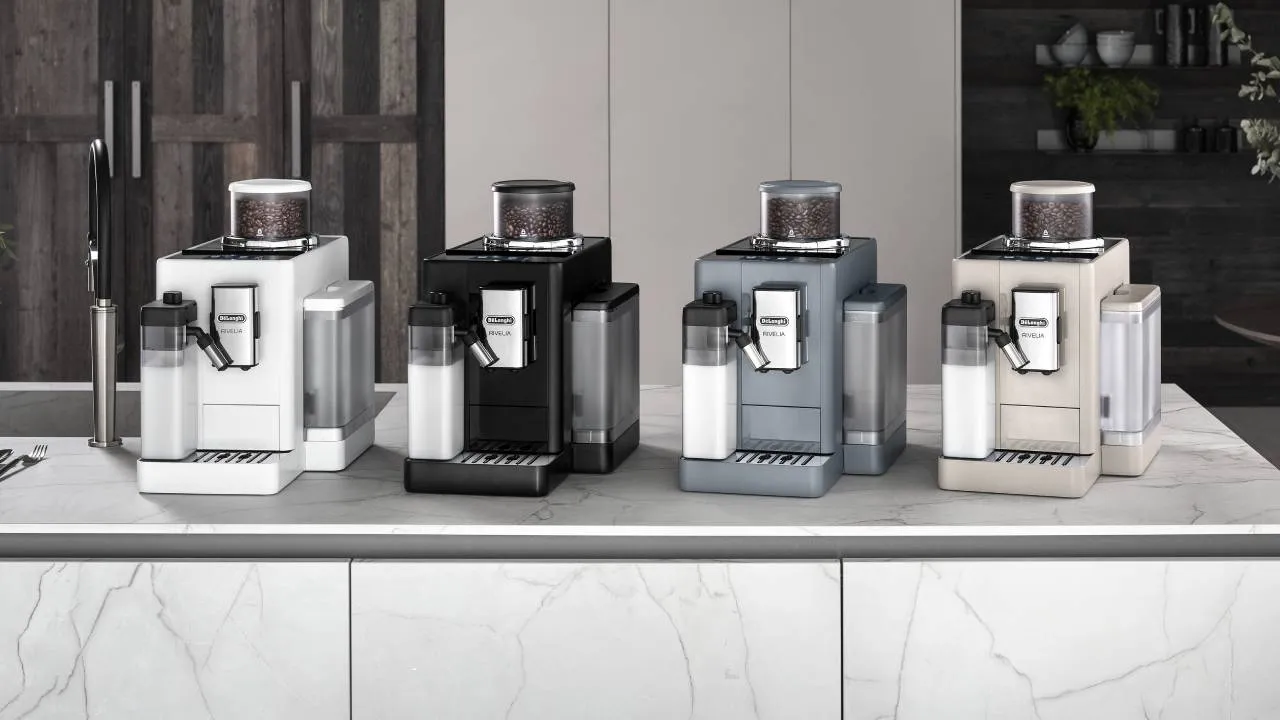
For many people, coffee is the reason they get out of bed in the morning, and it’s been that way over the past 30 years. Coffee, and most importantly, coffee machines, have seen a big change, shifting from the quick instant coffee to complex, bean-to-cup giants, strange flavours, and iced versions – and you can do it all from home.
A ‘global café boom’ took place in the 1990s to 2000s, and it’s still prevalent today. International coffee chains and small independent cafes are absolutely everywhere, and for a time, the over-the-top coffee machines with grinders, hoppers and portafilters were reserved for these places.
But that has seen a big change over the years, with almost every home around the world having some type of coffee machine, whether its drip, pod or French Press. For the UK especially, the cost of living crisis that started in 2021 made a lot of people cut down on takeaway coffees to save money, which resulted in more at-home coffee machines – and baristas – becoming the new normal.
Ninja took over the kitchen – and made appliances fun again!

One of the biggest brands to emerge over the last few years is Ninja. Ninja first started selling appliances back in 2009 with the launch of its first blender. But now, Ninja has become the king of air fryers, and expanded into every kitchen category you could possibly think of.
Over the years, Ninja has not only become well known for its extensive portfolio, but its weird and whacky designs. At the start, many thought Ninja appliances looked strange – and they still do – but they’ve quickly become the inspiration for other brands. Simply put, Ninja has made appliances fun again with its collection of bright, colourful and odd-shaped cooking gadgets.
Want to speak to your fridge? LG made it so…

Who doesn’t want to speak to their fridge?! I’d bet if you’d told someone 30 years ago that fridges with touchscreens and cameras inside would become popular, they would have thought you were crazy – and it still is crazy when you think about it.
LG was the first brand to come out with a smart fridge, and as early as 2000. Its first-ever model had an internet-connected display which tracked ingredients and suggested recipes – not too different from what we have today. However, this tech took a while to catch on back then, but it definitely has during the 2020s.
Now, LG continues to make smart fridges and has become one of the go-to brands for this type of appliance. Alongside its screen fridges which play music, make your grocery list and generate recipes, LG’s InstaView fridges include a glass panel that lights up to show the inside of your fridge when you tap on it – that’s right, you don’t even need to open the door.
Forget frozen pizza, Ooni introduced pro-level pizza at home

Outdoor cooking has come on leaps and bounds over the past 30 years. While barbecues have always reigned supreme, a strong contender emerged in 2012 focused on knocking them off their pedestal – the outdoor pizza oven.
Granted, pizza ovens have been around for centuries, but most were huge open, domed brick ovens that were mainly reserved for restaurants. But in 2012, Ooni came out with the first portable, outdoor pizza oven. It introduced a traditional and authentic way to make pizza from the comfort of your home, using gas, charcoal or electricity.
Dyson transformed the vacuum cleaner game…

Like Ninja, Dyson is one of the biggest appliance brands to come out of the past 30 years. Founded in 1991, Dyson’s first product was actually a washing machine, but the brand found its fame in the world of vacuum cleaners – and changed the game forever.
Launched in 1993, Dyson’s first-ever vacuum was the DC01, an upright model that used Dyson’s Dual Cyclone technology to prevent it from losing suction power – a common problem with vacuums back then. It added transparent bins that showed the dirt it was cleaning up, and introduced Dyson’s first signature design – a ball near the brush head that kept the wheels stabilised while letting the vacuum move around corners.
Since then, Dyson has become an industry leader in vacuums, expanding into cordless, corded, upright, handheld and now robot models. Dyson has also become a big name brand for other household appliances, including air purifiers, fans, hair styling tools, and most recently, electric toothbrushes.
… and then robots took over

While Dyson was overtaking the vacuum cleaner world, another type of vacuum was slowly emerging – although it would take several years before this style would catch on. The very first robot vacuum cleaner came out in 1996, but the brand to make a huge mark with robot vacuums was iRobot.
The iRobot Roomba was launched in 2002. Available in three colours, the original iRobot Roomba had manual buttons, three-stage cleaning and navigated in a random zigzag pattern. It took a while for others to catch on, but during the 2010s, they began to introduce self-navigating robot vacuums and mops with camera and map navigation.
Today, robot vacuums have gotten almost too out of control! While they’ve gotten more compact and come with self-cleaning stations, the addition of AI has added extra technology to these cleaning robots, including strange features like robotic arms for picking up socks and extendable legs for climbing stairs.
Amazon’s Echo smart speaker revolution

Nowadays, smart speakers are in almost every room in the house, and they were the first gadgets to introduce voice assistants and smart technology to the home. The very first commercial smart speaker that made this type of technology the norm in so many households was the Amazon Echo.
First launched in 2014, the Amazon Echo introduced Alexa, a virtual assistant that listened to spoken commands and either responded with robotic voice answers, or did the task for you. Apple and Google responded a few years later with their own models, but Amazon Echo has remained a firm favourite, and now includes Dot and Show devices.
They’ve also become more than speakers over the years, and are now commonly used as hubs to help manage and connect other smart devices.
Ring’s first-ever doorbell

One of the most popular pieces of smart security to come out in the last 30 years is the video doorbell. Security cameras had been around for decades before the first video doorbell came along, but they were originally large, clunky devices that were mainly used in offices, shopping centres and large corporate buildings.
But the emergence of the video doorbell offered a clever, easy way to keep an eye on your home while you weren’t there – and meant you wouldn’t miss your packages, either. The first smart video doorbell ever made was the DoorBot which was released in 2013. It was invented by Jamie Siminoff who later rebranded it as the Ring Video Doorbell.
Back then, the first Ring doorbell had an eye-like camera, and connected to an accompanying smartphone app via Wi-Fi – not dissimilar to what we have today. Since then – you guessed it – more brands have made their own video doorbells, the designs have become slimmer, and have added extra security features to keep your home – and parcels – safe.
Philips Hue lit the way for smart bulbs

Being able to turn your lights on using your phone or voice might have sounded wild 30 years ago, but it’s now the most common way to control your lighting – and it’s all thanks to Philips Hue.
Philips Hue was the first to launch LED smart bulbs in 2012, and this style of smart lighting has since expanded to strips, panels, skylights, and even Christmas lights. Colours and scenes have also emerged so if you want bright pink in your bedroom and dark blue in the kitchen, the world’s your oyster.
So…. What's next?
The home has seen some huge changes – both good and bad – over the past three decades, so what could be next? According to research, smart homes are on track to become the new standard, so we can expect much more smart devices to pop up over the next few years.
Smart tech has also been finding its way into appliances, and not just fridges. Ovens, washing machines and even air fryers have been given the smart treatment, so I’d imagine this type of technology will be added to even smaller cooking gadgets, like kettles and toasters – although there are some smart versions of these already.
AI is also becoming more prevalent in the home, but due to its controversial reputation, it’s hard to predict whether it’ll be the next big thing in the home or rejected completely. We’ll just have to wait another 30 years – when myself and T3 will be 60! – to find out.
