Your bed needs replacing if you do these 5 things at night, says sleep expert
From changing positions to stacking your pillow, here are five signs your bed is hurting your sleep


As a sleep expert, I’m often asked how often you should replace your mattress, and honestly, the answer is tricky. Most mattresses can last up to 10 years but it completely depends on how well you take care of it, and your overall sleep style.
But if you’re starting to feel sore and achy after a night’s sleep, this is a clear indication that your mattress is getting a bit worse for wear. However, while this sign makes it quite obvious that your bed is getting old, there are other, subtler things that you might be doing at night which signals that your bed needs replacing.
To find out more, I spoke to bed expert and store manager at Linthorpe Beds, Paul Keenan who said that “people assume their sleep habits are just quirks, but they're often a signal.” Keenan identified five things you’re doing at night which show that your mattress or pillow is no longer giving you the support you need.
1. Folding or stacking your pillow
Following your mattress, your pillow is arguably the most important part of your sleep set-up as it supports your head and neck. But if you’re folding your pillow in half or stacking multiple pillows, this is a sign your current pillow isn’t giving you enough support.
“"If someone is regularly bulking up their pillow through the night, that's usually their neck telling them it needs more support to stay level with the spine," says Keenan. "Lying on your side, there shouldn't be a gap wider than a clenched fist between your ear and your shoulder. Any bigger, and the pillow is too flat."

2. Sleeping diagonally across your bed
If you tend to sleep diagonally across your bed, this is a sign that your mattress is too narrow, rather than you taking up space, feeling restless or sharing a bed with a partner. As Keenan explains, “a useful test is to lie with your arms folded behind your head and elbows out," he adds. "If your elbows hang off both edges of the mattress, you and your partner are sharing less space than you think."
3. Migrating to the edge of your mattress
As someone who sleeps on their side – and who’s husband has very pointy elbows that push her towards the edge – I often find myself migrating to the edge of the bed for these reasons. But if you find yourself consistently drifting to the side rather than staying in the middle, this could mean the centre of your mattress is lacking support or sagging.
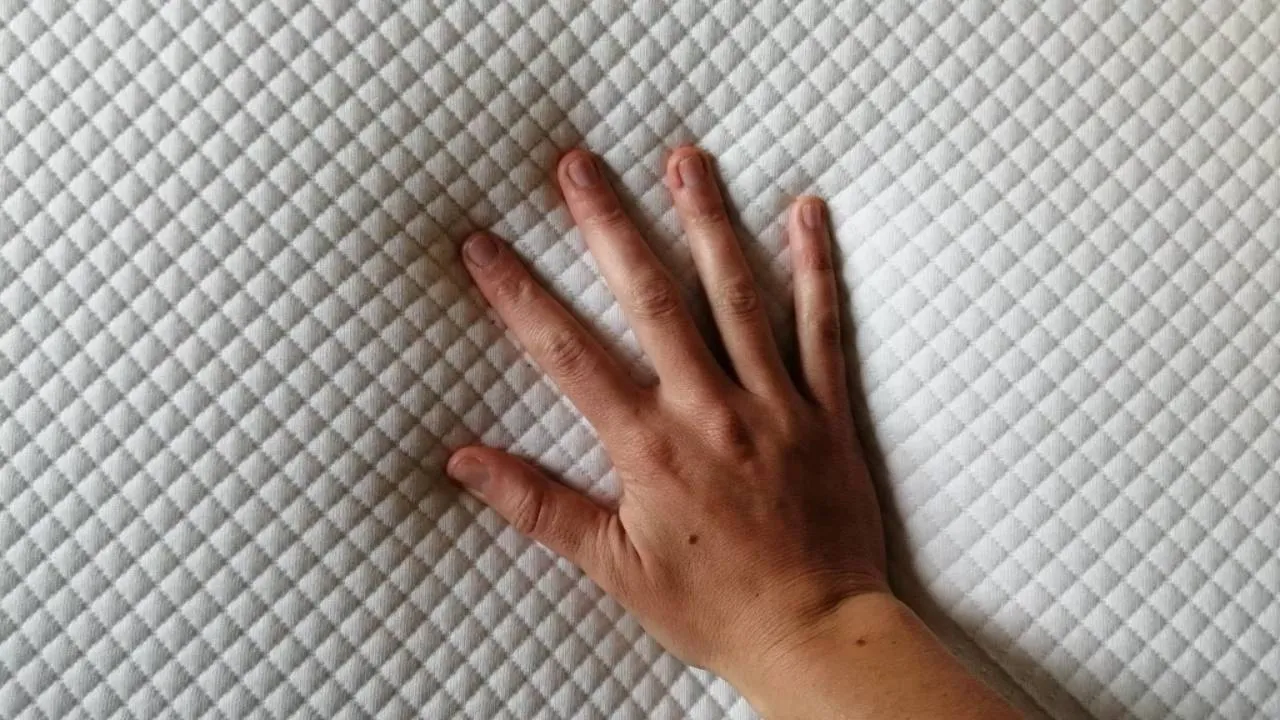
"A mattress that has softened in the middle will often push a sleeper towards the firmer edges without them noticing," says Keenan. "Ask someone to watch side-on while you lie in the centre. A visible dip, or a mattress that takes a moment to spring back after you press down on it, both point to a bed that has passed its best."
4. Constantly changing position
I can be a bit of a fidgeter in my sleep, however, I always return to sleeping on my sides. But if you’re turning over repeatedly in the night rather than settling into one or two positions, this can be a sign that your mattress isn't distributing weight evenly across your pressure points, like your hips and shoulders.
Keenan explains that if you’re waking up in a different spot several nights a week, “that's the body searching for relief rather than simply being restless… when the body keeps adjusting itself through the night, it’s usually the body's way of compensating for a mattress or pillow that isn't doing its job properly."
5. Overheating
Overheating at night could be due to a number of factors, but if you’re waking up with damp bedding and with your duvet hanging off the bed, this “usually points to poor airflow within the mattress or bedding rather than just the bedroom temperature.”
This is especially true with memory foam mattresses, as it “can trap heat if it isn't paired with a breathable cover," says Keenan. "Press a hand flat on the mattress for thirty seconds, then take it away. If the warm patch lingers rather than fading quickly, that's a sign the material isn't letting heat escape properly."
