Best drone 2026: transform your perspective
Take to the skies with the best drones, offering stunning aerial photography, intuitive controls, and cutting-edge features for beginners and pros alike


Welcome to the world of the best drones, where aerial videography and photography have been revolutionised for both pros and hobbyists alike. And when I say revolution, I mean it: today's drones are content creation powerhouses that can launch from your palm and return to you without GPS.
Curating a guide such as this is a big responsibility, which is why I take my job seriously, not only by testing the models listed thoroughly but also by asking experts for their input. Drone testing is a complex process that requires equal parts creativity and technical know-how.
This roundup might look like the best DJI drone guide, partly because the brand is in a league of its own, producing better and better drones with little competition. That said, other companies, such as HoverAir, also put out very decent options for those who crave DJI alternatives.
The best drone right now – at least, what we like the most – is DJI's foldable Flip. It's compact, with a sensational camera and flying performance, perfect for any self-respecting amateur pilot. If you need something small and capable, check out the DJI Mini 5 Pro. Money no object? You need the DJI Mavic 4 Pro, the best non-commercial drone right now.

The DJI Flip is a brilliant camera drone, blending impressive AI features, stunning 4K camera performance, and double the flight time of the Neo, all in a lightweight, user-friendly design. Its affordability, paired with premium functionality, makes it an unbeatable choice for new pilots ready to elevate their aerial creativity.

The DJI Mini 4 Pro redefines compact drone capabilities, offering 4K/100fps video, omnidirectional obstacle sensing, and advanced tracking in a sub-249g frame. Its lightweight design ensures regulatory ease, while features like true vertical shooting and extended flight time make it ideal for creators seeking portability without compromising performance.

The DJI Mini 5 Pro is a pocket-sized drone that packs pro-grade power, including a 1-inch sensor, 4K/120 fps video, and advanced obstacle sensing with LiDAR. It delivers superb stability, excellent image quality, and long flight times, though its slightly heavier build nudges it beyond the carefree sub-250 g class.
The best drone to buy right now
Best overall


After extensive hands-on testing, I can confidently say the DJI Flip is the most exciting drone that has come out in the last 12 months. It combines pro-level features with an accessible price point, making it ideal for new and intermediate pilots alike.
The Flip's 1/1.3-inch sensor captures stunning 48MP photos and 4K video at 60fps, supported by a 3-axis gimbal for smooth footage. Its AI-powered subject tracking and autonomous shooting modes, like MasterShots and Hyperlapse, simplify capturing cinematic shots.
Weighing just 249g, it avoids the need for advanced pilot licenses in many regions. The 31-minute flight time is impressive, nearly doubling that of the beginner-friendly DJI Neo. Its folding design with built-in propeller guards enhances portability and safety.
However, the Flip isn't without flaws. It lacks the speed of higher-end DJI models and doesn't offer comprehensive obstacle avoidance, particularly when flying backwards or using certain modes. Despite these limitations, its affordability and feature set make it a standout choice for pilots on a budget.
In conclusion, the DJI Flip offers exceptional value, blending advanced features with a user-friendly design. It's my top recommendation for those entering the world of drones without breaking the bank.
Read our full DJI Flip review.
Best mid-range
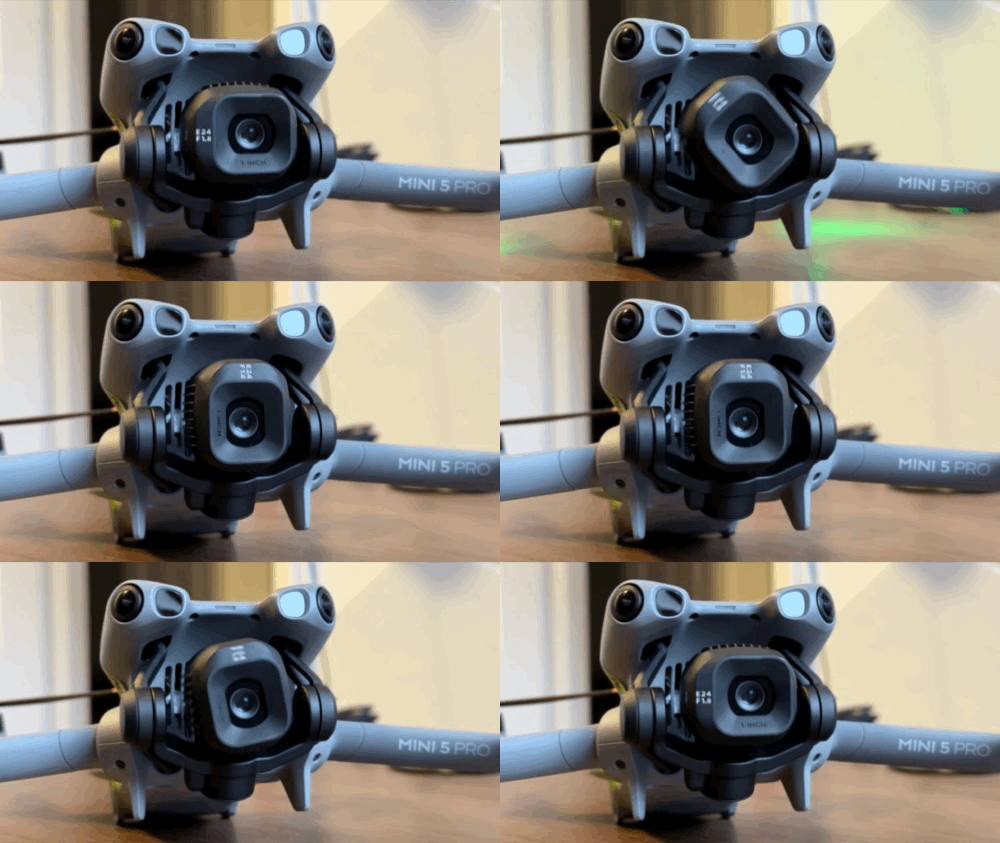
The DJI Mini 5 Pro is the most capable “Mini” drone DJI has made yet, merging portability with seriously pro-grade performance. It introduces a 1-inch CMOS sensor capable of 50 MP stills and 4K video up to 120 fps with 10-bit colour, producing rich detail, wide dynamic range and strong low-light performance that outclasses its predecessors.
The drone also supports true vertical shooting thanks to a 225° gimbal roll and includes a useful 48 mm Med-Tele mode for tighter framing.
Flight performance is refined with stronger motors, better aerodynamics and omnidirectional obstacle sensing backed by LiDAR, making it stable even in gusty conditions and easier to fly confidently. Intelligent flight modes like FocusTrack and Waypoint Flight help capture creative shots without manual piloting expertise.
Battery life with the standard Intelligent Flight Battery can reach up to 36 minutes (about 25-30 min in real use), and an optional extended battery pushes that further, though it adds weight. Speaking of weight, many units actually exceed 250 g, potentially triggering stricter regulations in some regions, a notable departure from the Mini series’ tradition.
The Mini 5 Pro is a powerful creative tool with stunning imaging and versatile flight features, but its newfound weight and regulatory implications might give hobbyists pause.
Read our full DJI Mini 5 Pro review.
Best premium

If you’re serious about aerial photography, the DJI Mavic 4 Pro is simply in a different league. After spending time flying it, it’s clear this drone isn’t about compromises: it’s about excellence. The triple-camera array is staggering, and the Hasselblad sensor, in particular, produced some of the most detailed and cinematic footage I’ve ever captured from the air.
While the Flip is fantastic for casual fliers, the Mavic 4 Pro is for those who want (and can handle) the best and are happy to pay for it. The gimbal system is silky smooth, the build quality is rock-solid, and the drone’s ability to handle adverse conditions impressed me every time I took it out. It’s fast, powerful, and packed with pro features that justify its premium price tag.
That said, it’s not for everyone. It’s larger, heavier, and more expensive than anything casual users would need. But if you want the best flying camera outside of enterprise gear, this is it. The Mavic 4 Pro redefines what a consumer drone can do, and after testing it extensively, it easily earns its spot as the best premium option on T3’s drone guide.
Read our full DJI Mavic 4 Pro review.
Best FPV drone

The Antigravity A1 breaks drone conventions with its immersive 360° flying experience and 8K all-around capture, marking one of the most original aerial gadgets of recent times.
Rather than a traditional gimbal camera, the A1 uses a twin-lens 360° imaging system that records everything around it, letting you reframe shots later, making it the best FPV drone for beginner pilots.
The system centres on Vision Goggles and a Grip motion controller, creating a unique, intuitive interface that feels almost like pointing and flying in a virtual world. The lightweight, travel-friendly design performs solidly in wind and handles well for pilots of varying skill levels, though its obstacle sensing remains basic compared with prosumer drones.
Battery life varies significantly: the standard pack promises up to ~24 minutes, while the high-capacity battery extends endurance to around 39 minutes, albeit pushing the drone over the 249 g regulatory threshold.
The A1 isn’t tailored for traditional cinematic shooters (its control scheme and niche appeal won’t suit everyone), but for those craving true innovation and immersive flying, this is a thrilling, creative machine that feels genuinely new.
Read our full Antigravity A1 review.
Best for indoor use


The HoverAir X1 Pro isn’t just a selfie drone; it’s also one of the best options for indoor flying you can get right now. The lightweight frame, enclosed propellers, and smart flight modes make it safe and easy to fly in tight, enclosed spaces where traditional drones would struggle.
During testing, we were impressed by how quickly it could be deployed and how stable it stayed indoors, even without GPS. The 4K video is sharp enough for social media and casual content creation, and the improved subject tracking is a real upgrade over the previous model, allowing you to grab smooth, hands-free footage without the usual indoor drone drama.
Of course, it’s not without limits. The battery life is short, and the lack of manual controls won’t satisfy serious drone pilots. But for quick content, indoor tours, or capturing memories without scaring the dog or wrecking the furniture, it’s fantastic.
If you’re looking for a compact drone that’s actually designed to handle indoor flying safely and easily, the HoverAir X1 Pro is a solid choice. The brand does other drones, too, which are mentioned below in the Honourable Mentions section of this drone guide.
Read our full HoverAir X1 Pro review.
Best budget

If you want a drone that nails the basics without breaking the bank, the Potensic Atom 2 is it. After testing, we can say it punches well above its weight, literally and figuratively. It’s light enough to avoid extra licensing hassle and still packs in 4K video, a solid 32-minute flight time, and even some intelligent flight modes you’d expect to find on much pricier models.
What impressed us most is how beginner-friendly it is. From the fast GPS lock to the stable hover, it made flying feel easy and safe. The 3-axis gimbal keeps footage steady, and while it can’t match DJI’s premium models for detail or dynamic range, the results are more than good enough for casual flying and social media.
Of course, you can’t expect miracles at this price. The app feels basic, obstacle avoidance is absent, and it’s not built to withstand heavy wind. But if you’re stepping into drones for the first time or want something lightweight for travel, the Atom 2 is a brilliant starting point.
Read our full Potensic Atom 2 review.
Honourable mentions
The DJI Mavic 3 Classic delivers stunning image quality with its Hasselblad camera and excellent flight performance. While it lacks the zoom lens of the Pro model, it remains a top choice for creators who want cinematic shots without the extra cost.
The DJI Avata 2 is a brilliant FPV drone with intuitive controls, impressive camera performance, and exhilarating speed. Although setup can be time-consuming, its ready-to-fly design and stunning footage make it worth the investment for drone enthusiasts.
The HoverAir X1 PROMAX builds on the success of its smaller siblings with upgraded flight stability and camera features. It's still ultra-portable and perfect for solo creators, but is a bit too expensive for what it has to offer.
Compact, light, and incredibly easy to fly, the first-generation HoverAir X1 is a great choice for casual users looking for quick, hands-free selfies and videos. Its simplicity is a major plus, though advanced users may find its feature set limited compared to larger drones.
With a triple-camera system and class-leading flight time, the last-gen DJI Mavic 3 Pro is a powerhouse for professional creators. Surpassed by the Mavic 4 Pro in 2025, it’s big and expensive, but if you want the ultimate flexibility in aerial imaging, there’s nothing else quite like it.
How to choose the best drone for you
In order to figure out which is the best drone for you, it really helps to understand a bit about how different types of drones work. In a nutshell, drones rely on rotors for propulsion and control. The faster these rotors spin, the greater the upward lift. The movement of a drone can be changed by altering the speed of one or more of its rotors.
These rotors are powered by motors which can be 'brushed' or 'brushless'. The difference? Brushed motors use a mechanical process (a 'commutator') to move the magnetic field that turns the rotors. Brushless motors, which are usually found on more expensive drones, are generally preferable and rely more on electronics rather than additional physical parts, such as the brushes in the commutators, to generate power. This means they generate less friction (and bear in mind that friction slows the motor down), produce less heat and provide better all-around performance.
Another important factor to take into consideration is skill level. Beginners should look for more rugged models, as well as features such as rotor protectors and one-touch recall controls. But don’t make the mistake of assuming smaller, lighter drones are better for beginners – these drones are often designed for those keen to perform complex aerial manoeuvres and might well be trickier to control.
Finally, remember to look for drones with the features you’re specifically keen on, and no more. Opting for a drone which boasts features you don’t need and won’t use will mean you’ll spend more on a drone which will weigh more and won’t perform in the way you want it to.
How we test the best drones
We test drones rigorously, evaluating factors like flight performance, camera quality, battery life, and ease of use. In the field, we assess stability, maneuverability, and response to controls, ensuring they handle well in various conditions.
We examine features like obstacle avoidance and follow-me modes for effectiveness. We scrutinise image and video quality, looking at clarity, colour accuracy, and stabilisation.
Battery life is tested through multiple flights, gauging how long each drone can stay airborne on a single charge. We also consider user experience, including setup process, app functionality, and overall intuitiveness.
FAQ
Do I need a licence to fly a drone?
Drone licensing requirements vary by country and drone weight. Recreational pilots often don't need licenses for lightweight drones but must adhere to flight regulations. Commercial drone use typically requires licensing. Always check local regulations to ensure compliance and safe operation.
Is it illegal to fly a drone over houses UK?
In the UK, it's not illegal to fly a drone over houses, but it's subject to regulations. Recreational drone pilots must maintain a safe distance from people, buildings, and vehicles. Flying over houses is allowed if privacy and safety are respected. Commercial drone operations require specific permissions from the Civil Aviation Authority.
Is it illegal to fly a drone over houses US?
In the US, it's not necessarily illegal to fly a drone over houses, but there are regulations set by the Federal Aviation Administration (FAA) that must be followed. These regulations include maintaining a safe distance from people and property, flying below 400 feet, and avoiding restricted airspace. Violating these regulations could result in legal consequences.
Can I fly a drone in my garden UK?
Yes, you can fly a drone in your garden in the UK, but you must follow the regulations set by the Civil Aviation Authority (CAA). Keep your drone within your line of sight, avoid flying near airports or crowded areas, and respect people's privacy and property.
Can I fly a drone in my garden US?
Flying a drone in your garden in the US is generally allowed, but it's important to follow Federal Aviation Administration (FAA) guidelines. Keep your drone within your line of sight, avoid flying near airports or crowded areas, and respect people's privacy and property. Some local regulations may also apply.
How much should you pay for a good drone?
The cost of a good drone can vary widely depending on factors like features, brand, and intended use. Generally, quality drones suitable for beginners can start from around $200 to $500, while more advanced models with professional-grade features can range from $1000 to several thousand dollars. Check out T3's best cheap DJI drone deals for the current offers.
