Dehumidifier, humidifier or air purifier – which gadget does your home actually need this winter?
Three gadgets, three jobs – but which do you need?


After a long, hot summer, many people might be welcoming the colder months with open arms – even if they bring their own problems.
Steamed-up windows and laundry that refuses to get anywhere close to dry are just two of the collection of household annoyances that lie in wait.
The proactive among us might be looking at gadgets to help solve some of these problems – namely air purifiers, dehumidifiers, and humidifiers – each of which tackles a rather different problem.
Choosing the wrong option could mean spending a fair bit of money without actually solving anything. To help you make the right call, we're looking at what each gadget actually does – and whether you need one at all.
For condensation: Dehumidifiers
Come winter, plenty of UK homes have condensation running down the windows and musty rooms – not to mention laundry that seems determined never to dry. Dehumidifiers are designed to combat exactly these situations.
On a basic level, a dehumidifier works by drawing moisture from the air and collecting it in a tank, which can then be poured down the sink. The process helps reduce indoor humidity, and less moisture in the air means less condensation.

Compressor dehumidifiers are generally more energy-efficient in heated rooms, while desiccant models can be better suited to colder spaces, such as garages and conservatories.
Dehumidifiers aren't going to magically fix leaking pipes or inadequate insulation – both of which can cause damp – but they can help make your home more comfortable and get your washing dry a little faster.
We recommend the MeacoDry Arete One, which includes modes for Smart Humidity and drying laundry, and runs quietly. The MeacoDry Arete Two 12L is another excellent option for smaller spaces, with the added bonus of app controls and an air purification mode.
For moisture: Humidifiers
Ironically, not every house has the same problem with humidity: central heating can make already dry indoor air feel even drier during the winter months.
While dry air might not sound like the biggest issue, it can contribute to dry skin, irritated throats, and even static electricity. Humidifiers release moisture into the air, making rooms feel more comfortable.
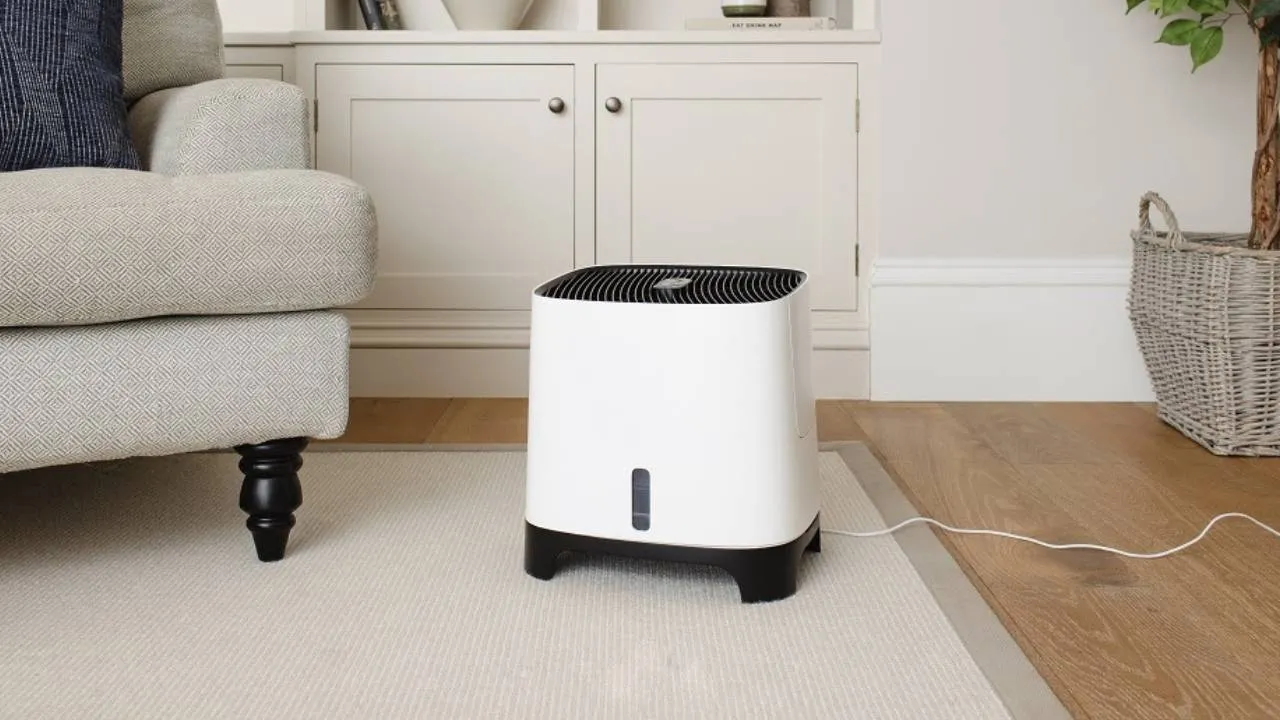
A relative humidity of around 40% to 60% is a useful rule of thumb, although it's best to aim towards the lower end when using a humidifier – too much moisture can encourage mould growth, and you don't want to end up needing a dehumidifier instead.
Humidifiers need regular cleaning, too, and adding moisture to an already damp room can cause more problems than it solves.
The Meaco Armin 300 is a good choice, with an evaporative system and quiet 24dB night mode. The design is intended to cope with hard water, too. The Blueair InvisibleMist Humidifier is a good smart option.
For clearing the air: Air Purifiers
So far, we've dealt with moisture in the air – but households also have dust, pet dander, cooking smoke, and plenty of other airborne nasties to contend with. To help tackle these issues, we now turn to air purifiers.
Air purifiers draw air through filters that capture airborne particles such as dust, pollen, pet fur, and smoke. HEPA filters are particularly effective at capturing particles, while activated carbon filters can help tackle certain gases and odours.

We tend to spend more time indoors during winter, too, while cosy comforts like wood-burning stoves and open fires can introduce additional particles into the air.
Purifiers won't remove moisture, fix damp, or replace ventilation, and you should consider things like room coverage (especially in larger homes) as well as noise and replacement filter costs.
The Dyson HushJet Purifier Compact HJ10 is our pick for the best air purifier, with quiet operation and automatic air-sensing, while the Coway Airmega 350 is well-suited to larger rooms.
Which one do you need?

Whether you need one of these gadgets (or even all three) really depends on the quirks of your particular home.
A cheap digital hygrometer can help you work out whether your home is too damp or too dry. Take measurements in different rooms over several days, including after activities like cooking and showering.
Before investing in a new appliance, see whether using extractor fans, keeping trickle vents clear, and tackling obvious sources of moisture makes a difference. Persistent or extensive damp might require more substantial repairs.
Some devices combine dehumidification and air filtration, while others offer purification and humidification, although it's worth checking how well they perform both jobs before spending extra.
After all, there's nothing worse than spending £200 on a gadget only to discover you've been solving the wrong problem.
