Sunseeker Elite X4 review: A robot mower that feels effortless
A wire-free mower that ditches the antenna (and most of the hassle that comes with it)
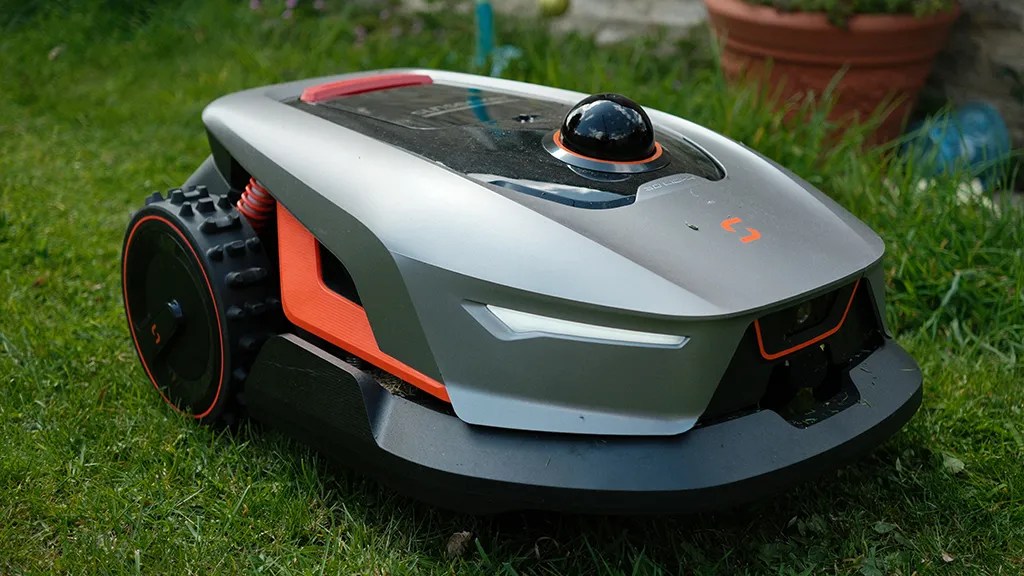

The Sunseeker Elite X4 gets the basics right in a way a lot of robot mowers still don’t. Setup is simple, navigation is consistent, and once it’s up and running, you can trust it to get on with the job without constant checking in. It’s not the most advanced system out there – edges still need tidying up, and the app leans more towards simplicity than deep customisation – but for smaller, everyday gardens, it makes a lot of sense.
-
+
Super simple setup with no antenna required
-
+
Consistent, reliable navigation
-
+
Quiet operation
-
+
Even cutting performance
-
+
Self-cleaning LiDAR dock
-
-
Auto-mapping can struggle with drops or more complex layouts
-
-
Edges still need manual tidying with a strimmer
-
-
App lacks deeper customisation options
-
-
Wi-Fi signal needs to be solid for smooth setup and control
Why you can trust T3 Our expert reviewers spend hours testing and comparing products and services so you can choose the best for you. Find out more about how we test.

Welcome to our Sunseeker Elite X4 review. Before we dive into the details, it’s worth setting the scene. Cue Hollywood trailer music…
Robot lawn mowers have come a long way. The days of laying out perimeter wire around awkward borders and winding paths are, thankfully, long gone. That’s not to say there’s zero setup faff, though. Even now, antennas, signal quirks, and initial mapping runs can still add up to a slightly frustrating experience.
The Sunseeker Elite X4 is trying to sidestep most of that. Instead of relying on RTK GPS and an external antenna like many rivals, it uses a combination of 360-degree LiDAR and vision-based AI to understand where it is and where it needs to go... but does it actually deliver in practice?
I spent a month watching it diligently zoom around my garden to find out.
Price and availability
The Sunseeker Elite X4 comes in at £1299 in the UK, and is rated for lawns up to 1200m². That puts it firmly in the upper/mid-range of today’s robot mower market, particularly among newer wire-free models aimed at small to medium-sized gardens.
It's available to buy via Sunseeker's website and other selected retailers, including Winchester Garden Machinery.
Why you might want a robot mower like this
If you’re new to robot lawn mowers and already feeling a bit lost, here’s a quick crash course.
Real-Time Kinematic (RTK) systems use satellite positioning to guide the mower, which is why they typically require a separate antenna somewhere in your garden. They can be extremely accurate, but they’re not always the easiest to set up. Placement matters, and obstacles like trees or buildings can interfere, so there’s often a fair bit of trial and error involved.
The Sunseeker X4 Elite takes a different, antenna-free approach. Instead of relying on satellites, it uses a LiDAR sensor to scan its surroundings and build a live map of your garden, paired with an AI-powered camera for object recognition, allowing it to navigate smoothly without constant external signals.
Rather than cutting a large amount of grass once a week, robot mowers also work little and often – meaning no piles of clippings, no dragging a heavy mower out every few days, and almost no need to think about mowing at all. Well, almost.
I’ve yet to test a robot mower that can cut close enough to fences to completely remove the need for occasional manual strimming. However, compared to the time and effort of regular mowing, the convenience is still hard to overstate.
As for the Elite X4, it comes well equipped. It supports multi-zone mowing, scheduling, and full app control, along with Wi-Fi, Bluetooth, and 4G connectivity. It also works with Alexa and Google Home, and adds useful extras like a rain sensor, night mode, and over-the-air firmware updates, meaning it should keep improving over time.

Installation and set up
Setting up the Sunseeker Elite X4 is a mercifully simple process. Beyond clipping the LiDAR dome cleaning brush to the charging station, there’s nothing to assemble and the mower itself is a very manageable 12.2kg.
The fact that there’s no antenna to install or correctly position is also a godsend. Compared to setting up an RTK aerial (where positioning and signal strength matter), it was nice not having to worry about an extra bit of kit.
The only real work you have to do when setting things up is using the supplied plastic pegs to secure the charging station into the grass. This was such an easy process that my five-year-old son managed to do most of them on his own, though we broke two of the supplied pegs before realising that I was trying to push them into a patch of rock under the grass.

As for the initial mapping of the garden, I managed to trip myself up early on by leaving the black rubber protective cap on the LiDAR dome, which meant the Elite X4 was trying to map the garden without being able to “see” properly. I had read about removing the protective cap in the instructions, but my brain failed me.
Wi-Fi was another hiccup. The thick stone walls of our house meant that the signal wasn’t quite strong enough at first, which caused interruptions during mapping. Moving our Wi-Fi mesh node onto the kitchen windowsill easily sorted that out, at least.
As for the mapping process itself, it’s great to see that auto-mapping is available. Typically, you drive robot mowers around the perimeter of your garden using your phone as a Bluetooth remote control. It’s quite fun, but having the process automated just adds to the convenience.

My garden is, unfortunately, a bit too unconventional for the auto-mapping feature to handle. While the lawn itself is quite small, it’s a few feet higher than the patio, with no barrier. During the auto-mapping process, I watched the Elite X4 drive straight over the edge when mapping near the drop. It didn’t flip over and no damage was done, but I decided to manually map the perimeter, making sure that I gave that pesky edge enough clearance to avoid it from ever happening again.
Design and features
The Sunseeker Elite X4’s design is fairly understated. It doesn’t have the aggressive, almost F1 car-inspired look of some other models, but it still feels well put together.
Build quality is strong, and it’s not too heavy either, tipping the scales at a very manageable 12.2kg. This makes the X4 much easier to pick up and move around compared to, say, my previous 18kg Luba 2 test unit. You’re obviously not supposed to be lugging robot mowers around regularly, but during setup, it makes a real difference, making it less intimidating to handle.
Elsewhere, the all-important LiDAR dome feels robust, and there are some thoughtful touches around it, too. The charging dock’s built-in brush cleans the dome each time the mower docks. Given how important a clear sensor is for LiDAR-based navigation, it’s a very useful addition indeed.

There’s also an LCD display and physical controls tucked under a flap on the mower itself, along with a manual height adjustment dial. While you’ll want to stick to the app most of the time, it’s nice having the option to kick things off manually.
That said, the blade height adjustment dial is the only way you can adjust them. Having gotten used to other mowers where blade height can be adjusted via an app, I was initially worried about the manual-only method.
It turns out that I rarely, if ever, change cutting height. Unless you’re set on tinkering with the height remotely, the manual adjustment shouldn’t be an issue, and it certainly contributes to keeping the X4 Elite’s cost down.
Navigation and performance
So, having said all that, how does the Sunseeker Elite X4 actually perform? Simply put, it just gets on with the job.
During testing, it never once seemed lost, and it confidently handles my garden's slope without issue. It slows slightly as it approaches objects, adjusts its path and carries on, rather than stopping abruptly or second-guessing itself. It also moves around everyday obstacles like toys and the washing line base without fuss.
Movement across the lawn is also methodical, rather than random. It works in clean, consistent passes, which helps with both coverage and the final finish. It doesn’t feel rushed, but it also doesn’t waste time doubling back unnecessarily. You can adjust the speed settings in the app, and I always prefer to go for the slowest, most thorough option – after all, it’s the machine doing the work, not me.
Most importantly, any concerns I had about the lack of RTK navigation have been quashed, with no navigational hiccups presenting themselves during testing. As mentioned, RTK can be extremely accurate, but it depends on signal quality and antenna placement – something the Elite X4 doesn’t need to worry about.
This doesn’t automatically make LiDAR better in every situation, of course, but it can make it a better fit for gardens with more obstacles, tighter layouts or less predictable signal conditions.
Overall, for my use case, I noticed no negative performance drops compared to an RTK mower. In fact, the Sunseeker Elite X4 seems simpler to set up, while offering the same performance as other RTK mowers I’ve tested.
Cutting performance and battery life
If you’re new to robot lawn mowers, it’s worth understanding how they work – by trimming little and often, with clippings left behind as mulch, rather than collected.
As for the Elite X4, its grass-cutting performance is strong. The finish is clean and consistent, with neat, straight lines across the lawn. It handled slightly longer grass – around two inches – without any issues. Turning is smooth as well, and it didn’t leave visible marks or churn up the grass during testing, which is a plus.
The 20cm cutting deck sits within the typical range for robot mowers, which often fall between roughly 16cm and 22cm. That means the Elite X4 isn’t exactly the quickest in terms of coverage per pass (especially compared to wider dual-disc models), but for my smaller garden, it didn’t make much difference in practice.
Better yet, it’s incredibly quiet during use – so much so, that you’d be forgiven for thinking it wasn’t actually doing anything. This is a machine you can set up to run at 8am on a Sunday without fearing the wrath of even the most sensitive of neighbours.
As for battery life, for my relatively small lawn, the Sunseeker Elive X4 completes a full, careful pass in around 40 minutes without needing to recharge, which feels about right for a mower in this class with a 5Ah battery.

App
Sunseeker’s app is simple, clean and easy to navigate, though compared to something like Mammotion’s app, it’s less feature-heavy. There’s less fine control and fewer settings to tweak, but that actually makes it quicker and less intimidating to use, without cutting back on any major features.
Mapping and zone management are also handled through the app, and there are detailed instructions at every step. It’s quite fun seeing the generated 3D LiDAR map of your garden too.
Overall, if you’ve never used a robot lawn mower before, the app is enough to guide you through setting everything up, letting you adjust parameters and set schedules without any issues.
Verdict
The Sunseeker Elite X4 isn’t trying to be the most advanced robot mower around, and that’s fairly reflected in its price. It’s focused on making the overall experience straightforward, and it nails the brief. Setup is quick, navigation is consistent, and once it’s running, it’s something you can trust to just get on with the job.
It’s not perfect, mind. Auto-mapping needs caution in gardens with drops, and edges, as with other robot mowers, still need a manual touch. However, if you want something that works without the extra complexity that can come with more involved setups, the X4 makes a strong case for itself. In short, for a smaller, everyday garden, it’s one of the easier robot mowers to live with.

Alternatives to consider
Robot lawn mowers take a few different approaches when it comes to navigation, and the X4 sits somewhere in the middle. At one end, you’ve got RTK-based machines like the Mammotion LUBA 2 AWD, which combine satellite positioning with cameras for obstacle detection. Newer models like the Mammotion LUBA 3 AWD step things up, mixing RTK, cameras and LiDAR into a single system. They’re impressively capable, but that added complexity also brings a higher price.
At the cheaper end, there are still plenty of boundary wire-based options like the Stihl iMow 5 Evo, which typically sits closer to the £2000 mark. It’s a well-established and reliable machine, but installation is more involved, and you lose some flexibility if you want to change your lawn layout later.

