Check out the world's first 3D printed home in caravan form – and it's as eco-friendly as it is cute
This clever little camper is printed in one piece using recycled plastic bottles


I've seen some pretty unusual approaches to camper design, but this one takes things to an entirely different level. Ukrainian-German company Lemki Robotix has developed what it describes as the world's first 3D-printed mobile home, creating a compact caravan using recycled plastic and specialist printing technology.
Called the Tiny Camper, the project demonstrates how 3D printing could change the way we build everything from camping equipment to mobile homes.
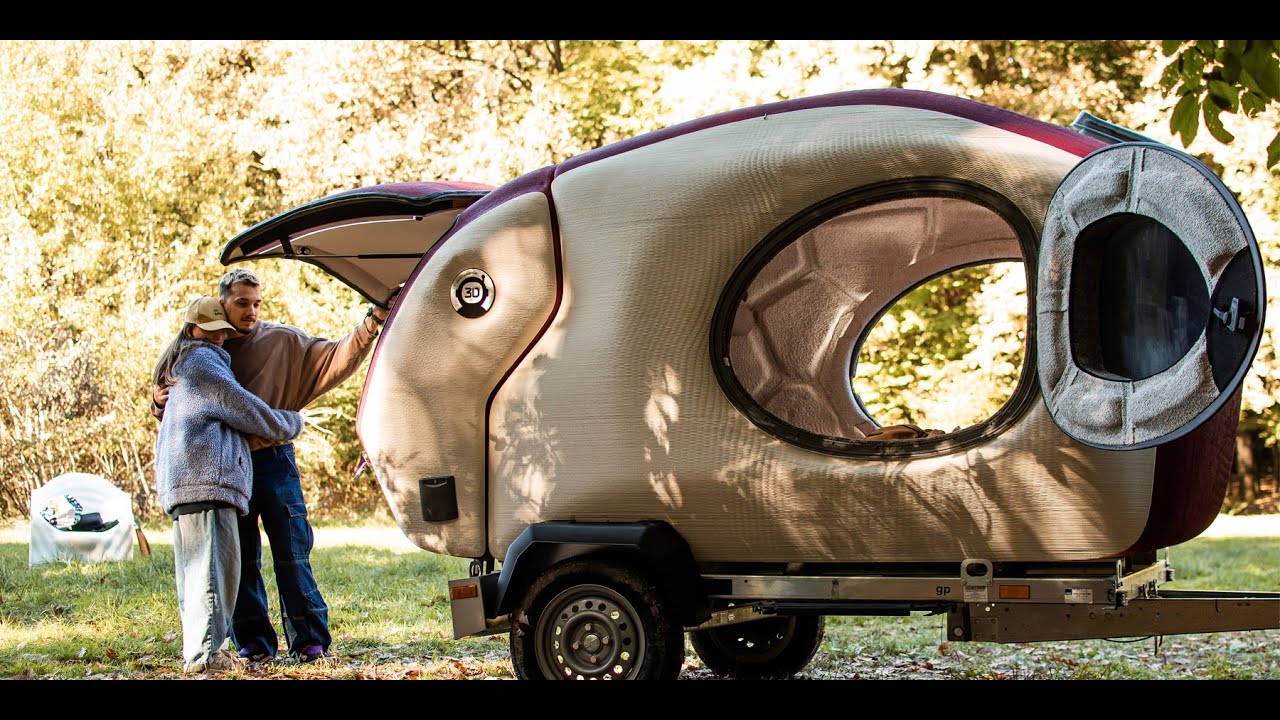
At first glance, the Tiny Camper looks like a rather futuristic take on the traditional teardrop caravan. Look a little closer, though, and you'll discover that its entire outer shell has been produced using large-scale 3D printing.
Developed by Lemki Robotix in collaboration with iScale3D, the camper uses recycled polypropylene reinforced with fibreglass. The material incorporates more than 7,000 recycled plastic bottles, while its nine-millimetre-thick walls provide strength without adding unnecessary weight. The result is a shell weighing just 250kg, making it relatively easy to transport.
The interior is designed to make the most of the available space, with a sleeping nook, kitchenette and plenty of storage. There's also an off-grid element, with integrated batteries that can be connected to solar panels, allowing the camper to generate and store its own power.
It gets cleverer still. Built-in sensors monitor things such as water levels, battery charge and temperature, giving the Tiny Camper some of the functionality you'd normally associate with a smart home. Not bad for something that starts life as a pile of recycled plastic granules.
The printing process itself is called Fused Granulate Fabrication (FGF), which uses plastic granules rather than the filament found in many conventional 3D printers. Lemki Robotix developed its own large-scale printing equipment, based on a robotic system from German manufacturer KUKA, alongside custom software to control the production process.
Beyond the novelty, there's a sustainability argument here. Using recycled materials, reducing manufacturing waste and creating a lightweight structure could make this a genuine alternative to more traditional caravan construction. The company also says the approach could support mass production, potentially making this type of mobile home more affordable in the future.
How much does the Tiny Camper cost?
For now, the Tiny Camper is a functioning prototype rather than something you'll find on your local caravan forecourt. However, Lemki Robotix sees potential in the technology, with the aim of developing production-ready mobile homes and making them available to a wider audience.
It's certainly a fun way to turn yesterday's plastic bottles into tomorrow's holiday accommodation. And if printing your next home is the future of caravanning, I'm eager to see what comes out of the printer next.
You can find out more on Lemki Robotix's website.
