DJI Osmo Pocket 4 review: A mini cinema camera you can fit in your pocket
I didn’t expect to like the DJI Pocket 4 this much (well, maybe I hoped)


The Osmo Pocket 4 refines an already excellent formula with better slow-motion, smarter tracking, and longer battery life, making it one of the most (if not the most) capable pocket cameras you can buy today. Pocket 3 owners don’t need to rush, but newcomers and serious creators will find it hard to ignore.
-
+
107GB of internal storage
-
+
Excellent stabilisation and tracking
-
+
4K/240fps slow motion
-
+
Long battery life
-
-
Tight field of view for selfies in vertical mode
-
-
Extra buttons hidden in vertical mode
Why you can trust T3 Our expert reviewers spend hours testing and comparing products and services so you can choose the best for you. Find out more about how we test.

I test a ton of camera gear at T3, so I hope it makes sense that, now and again, I will miss one. I remember when DJI’s Pocket 3 was launched. I was up to my neck in work, so I passed on the opportunity to test it, thinking it was just another gimbal camera. DJI must have had a drone coming out at the same time, so I decided to focus on that.
Little did I know how influential the Pocket 3 would become over the next couple of years. People absolutely gobbled it up, and it ended up disrupting the vlogging/creator community, thanks to its compact form factor, excellent video quality and ease of use. In fact, the camera was so successful that it made GoPro the best-selling action camera brand in Japan for the first time.
I was kicking myself for missing the chance to try the Pocket 3, so when rumours started circulating about its successor, I knew I had to seize the chance to try it. The Osmo Pocket 4 is here, and it’s no longer a vlogging camera: it’s an ultra-compact cine camera for prosumers and professional creators alike.
I’ve been testing Pocket 4 for the last couple of weeks and was thoroughly impressed with its performance, from subject tracking and battery life to low-light performance and beyond. Similar to the company’s Mini drone series, the Pocket 4 stops just short of being a professional piece of video-creation tool, all in a rather user-friendly package.
DJI Osmo Pocket 4 review
Price and availability
The standard Osmo Pocket 4 is priced at £445 / €499 / AU$769, with the Essential Combo at £429 / €479 / AU$749, and the Creator Combo at £549 / €619 / AU$959. It's available now at DJI.
That places it marginally under the Osmo Pocket 3’s original launch pricing of £489 (standard) and £619 (Creator Combo), suggesting DJI is keeping the entry point competitive despite the spec upgrades.
These days, DJI sells the Pocket 3 for less at £389 / £499 (Standard and Creator Combo, respectively), and there are often offers that push the price all the way down to £329. Overall, not a huge price increase (or, looking at the original selling price, a reduction), which puts the Pocket 4 spec and feature upgrades in a much better light.
As it is these days, sadly, DJI doesn’t officially sell the Pocket 4 in the US through its official website. You will likely be able to find it through third-party retailers. Availability in the UK, EU and AU looks pretty straightforward.
Design and build quality
The Osmo Pocket 4 retains DJI’s signature pocket-sized form factor, but the specs show a slightly more substantial body than before. It measures 144.2 × 44.4 × 33.5 mm (L×W×H) and weighs 190.5g, giving it a more solid, balanced feel in the hand while remaining compact enough for everyday carry.
The vertical design is unchanged, with the camera and gimbal housed at the top of the unit and the controls and display integrated into the slim handle.

At the front, the Pocket 4 features a 2-inch touchscreen with a resolution of 556 × 314 and a peak brightness of 1,000 nits, a big brightness bump over the predecessor.
The screen continues to act as both a monitor and a primary control interface. You can turn the camera on and off by twisting the display, which locks into place with a satisfying click.
The Pocket 4 retains a joystick-style controller, but this now offers more precise input, with gimbal speed increasing the further the stick is pushed.

Alongside this, DJI has introduced a clearer button layout, including a dedicated zoom control for quickly switching between focal lengths and a customisable function button that can be mapped to frequently used settings such as recentering the gimbal or switching shooting modes.
A small caveat of the new button layout is that the additional buttons are hidden under the rotating screen, so they aren’t visible or, in fact, usable when the Pocket 4 is in vertical mode.

The camera module is built around a 1-inch CMOS sensor, paired with a 20mm equivalent lens with an f/2.0 aperture and a focus range from 0.2 metres to infinity.
This sits on a three-axis mechanical gimbal, offering a wide range of motion across all axes, including tilt from -180° to 98° and roll from -220° to 63°. The system supports a maximum controllable speed of 180° per second.
Audio hardware is also integrated into the body, with three built-in microphones supporting spatial capture. Another big upgrade is the generous 107GB of built-in storage, which has transfer speeds of up to 800MB/s, along with microSD card support.
New features
The Osmo Pocket 4 builds on the foundation laid by its predecessor, focusing on expanding its capabilities. The camera system pairs a 1-inch CMOS sensor (same size as before) with support for 4K video at up to 240fps in slow motion, alongside an expanded 14-stop dynamic range and 10-bit D-Log recording.
These new additions alone push the Pocket 4 further into enthusiast and semi-professional territory, offering greater flexibility for colour grading and high-contrast scenes. The accompanying app hasn’t quite caught up with the professional processing idea (as far as I know) and only supports basic processing of 10-bit D-Log footage, which isn’t what most people would consider full colour grading.
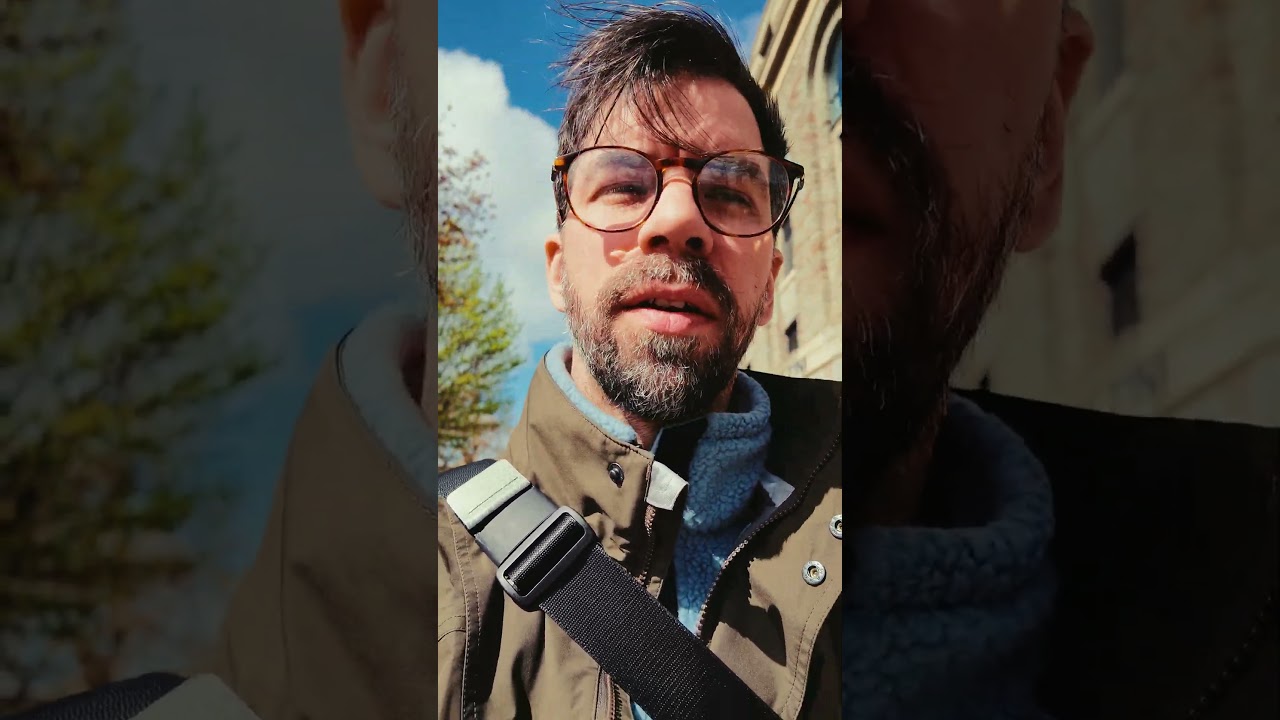
A huge-huge upgrade is the introduction of 2x lossless zoom, giving you more control over composition without sacrificing image quality. The Pocket 4 also features the latest and most advanced subject-tracking system from DJI to date, with ActiveTrack 7.0, bringing improved stability, broader subject recognition, and support for tracking at higher zoom levels.
The Pocket 4 supports four-channel audio recording when paired with compatible DJI microphones, with the onboard system using three built-in microphones for spatial capture – good for group shots and interviews alike.
Camera performance
The Osmo Pocket 4 uses the aforementioned 1-inch CMOS sensor, paired with a 20mm equivalent f/2.0 lens. The focus range ranges from a fairly close 0.2 metres (well outside arm’s length) to infinity, making the camera versatile enough for everything from close-up vlogging to wider landscape shots.

I found the standard 1x zoom to produce quite a tight selfie composition, making it hard to cram more people into the frame, even with my long monkey arms, in vertical shooting mode. There is plenty of space for even three or four people if you’re shooting horizontally, though.
The camera supports 4K horizontal recording at up to 60 fps in standard mode, along with a full range of frame rates across 4K, 3K, and 1080p resolutions. Vertical video is also supported at up to 3K, which is plenty for TikTok and YouTube Shorts.
(In fact, both platforms will likely compress a 3K video into something closer to a 1080p resolution.) For slow-motion capture, the Pocket 4 can shoot 4K at up to 240fps, a massive increase from the Pocket 3’s 120 fps.
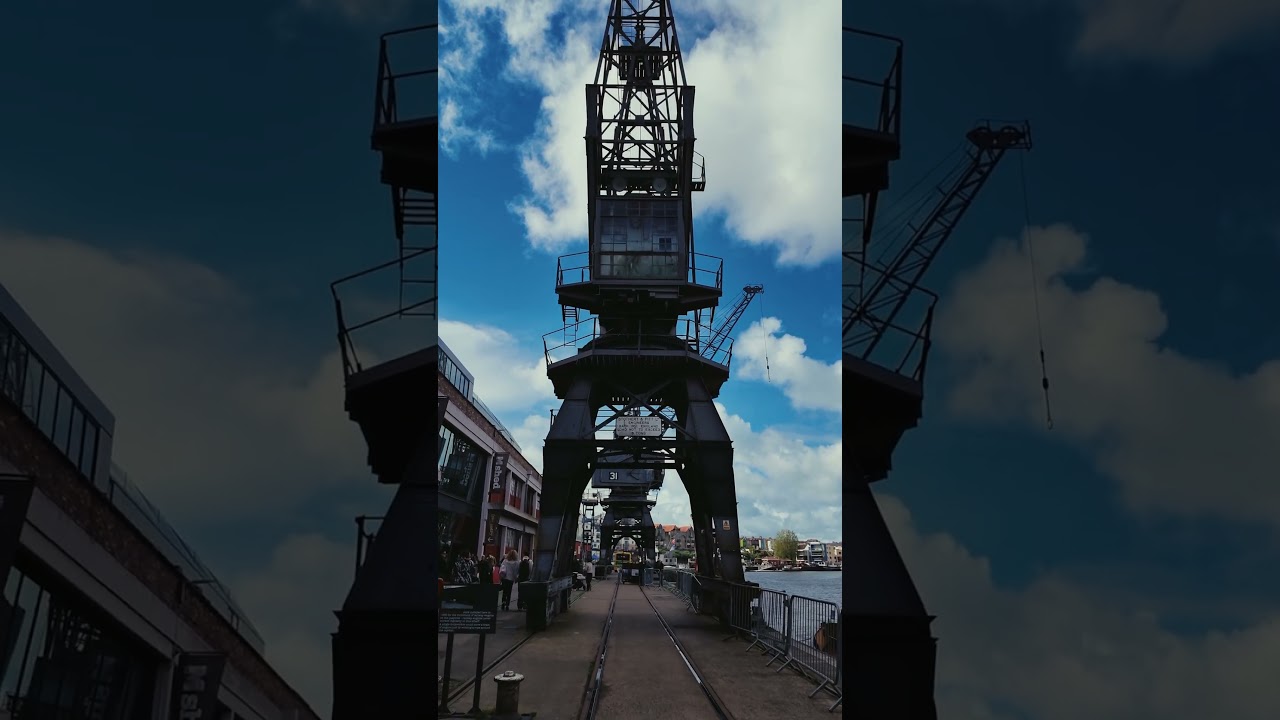
Image quality is backed up by a maximum photo resolution of 7,680 × 4,320 (approximately 37MP), with a wide ISO range of 50–12800 for stills. The electronic shutter spans from 1/8000s down to 4 seconds in photo mode. In video, shutter speeds adjust automatically or can be manually set within a more limited range, depending on the shooting mode.

The camera also supports a range of creative shooting modes, including timelapse, motionlapse and hyperlapse, with automated intervals and speed adjustments built in. Low-light performance is supported via a dedicated video mode up to 4K/30fps; however, it only works in landscape mode.
As well as the ‘lossless’ 2x zoom, the Pocket 4 also offers up to 4x zoom, although this is not available in certain modes such as low-light, slow motion and time-lapse.
Subject tracking and stabilisation
The Osmo Pocket 4 continues to rely on its three-axis mechanical gimbal, which, unlike purely electronic stabilisation systems, physically counteracts movement along the pan, tilt, and roll axes. Gimbal performance is smooth as butter, with the end footage looking shake-free even when you move the camera from side to side quite energetically.
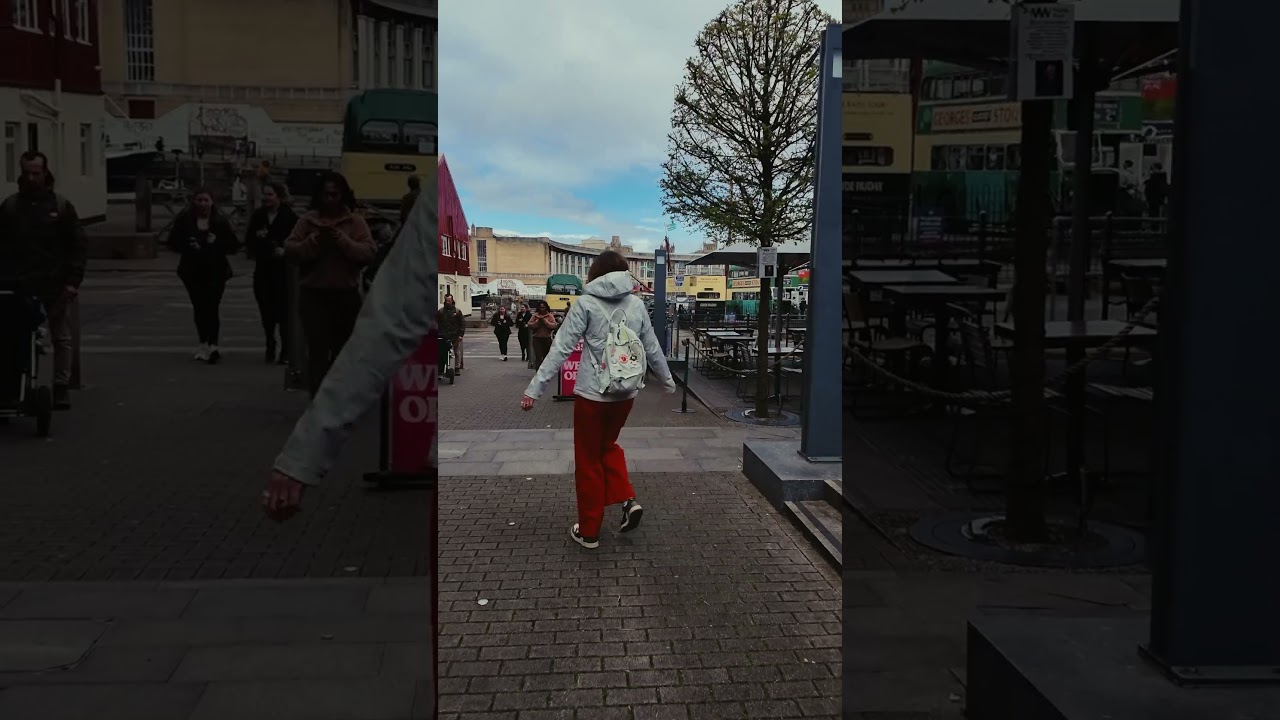
Subject tracking has been upgraded to ActiveTrack 7.0, which supports tracking people, vehicles, pets, and other objects and can maintain focus even when subjects move unpredictably or briefly leave the frame. Tracking also works in conjunction with 2x zoom, making it easier to follow subjects at a distance without losing framing.
In my experience, the Pocket 4 locked onto subjects accurately. The camera will automatically highlight faces and objects, such as pets, in the frame; double-tapping them will activate tracking. The camera will continue to track objects even if they are temporarily obstructed until it reaches the extreme ends of the gimbal range. Tapping the screen again will immediately drop tracking.
Battery life and charging
The Osmo Pocket 4 is powered by a 1,545mAh lithium-ion battery (11.95Wh), which DJI says can support up to 240 minutes of operating time. By comparison, the Osmo Pocket 3 typically delivers around 160-166 minutes of runtime, meaning the newer model can run significantly longer before needing a recharge.

Charging speeds remain broadly similar. The Pocket 4 supports fast charging, reaching 80% in just 18 minutes and a full charge in approximately 32 minutes, closely mirroring the Pocket 3’s already quick top-up times. I can confirm that charge times are lightning-fast. I popped the Pocket 4 on the charge with 71% battery left, and 15 minutes later, it was already in the high 90s.
Verdict
As someone who’s a self-proclaimed expert on all things DJI but new to the Pocket series, I had a blast testing the fourth iteration of the camera. It’s an extremely capable recording device, and if you liked the previous version, you’ll love the Pocket 4. It’s better in almost every conceivable way and sells for less than the Pocket 3's original RRP.
That said, if you already own the Pocket 3, there’s little reason to rush out and upgrade unless you’re a professional creator or videographer. The older model isn’t just cheaper these days, it’s also every bit as capable as it was at launch.

If anything, recent high-profile shoots, including footage captured during the Artemis II mission, serve as a reminder that great photos and videos come down far more to how you use the gear than the gear itself.
Even though the upgrades are significant, the Pocket 4 doesn’t reinvent the vlogging camera formula, only improves it. The 2x zoom is nice, and so is the better subject tracking and slower slo-mo, but the Pocket 3 does have zoom, is very good at subject tracking and has 120 fps slo-mo.
All things considered, the DJI Osmo Pocket 4 is a brilliant evolution of its predecessor and offers all the features people love about the pocketable vlogging camera, and then some. If you’ve been thinking about getting a Pocket 3 but couldn’t quite convince yourself yet, the Pocket 4 might just be the nudge you’ve been waiting for.
