Insta360 X6 review: Bigger sensors and smarter AI make this the brand's best 360º camera yet
A hugely capable 360 camera that wants to replace your action cam, vlogging camera and gimbal, but the jack-of-all-trades approach has its limits


The Insta360 X6 is an impressive all-round camera with few direct rivals when it comes to versatility. It won't replace dedicated cameras for every job, but its rugged design, excellent image quality and clever AI features make it a brilliant choice for travellers and creators who want one camera that can do almost everything.
-
+
Excellent image quality
-
+
Huge creative potential
-
+
Long battery life
-
+
Tougher replaceable lenses
-
+
Versatile shooting modes
-
-
Higher price might not be justifiable for everyone
-
-
Touch controls aren't ideal
-
-
Large file sizes
-
-
Specialist cameras perform better in their niche
Why you can trust T3 Our expert reviewers spend hours testing and comparing products and services so you can choose the best for you. Find out more about how we test.

Insta360 has become a household name in recent years, not just in action cameras but also in vlogging gimbals, webcams and even drones. That said, the company’s main strength is still 360º action cams. In fact, it’s still the number one brand in the 360-degree camera market, with over 68% unit share and 71% revenue share (according to IDC).
Its flagship 360º camera franchise, the X Series, saw a mid-cycle update in October 2025 in the form of the Insta360 X4 Air. Prior to that, the Insta360 X5 came out in April 2025, which remained the top-of-the-range model – until now.
Looking back now, it’s clear that Insta360 ‘demoed’ the new form factor in the X4 Air, but we had to wait until now for meaningful spec upgrades. The new X6 is a better camera in all conceivable ways than both the X5 and the X4 Air, which shouldn’t come as a surprise. It also builds on the learnings from the Insta360 Luna Ultra, which launched earlier this year.
Looking at the data, the new camera has bigger sensors, a faster processor, tougher lenses and weather-proofing, better on-camera editing, longer battery life and Dolby Vision and I-Log capability. It’s also a lot more expensive than its predecessors, and some more casual users might not be able to use the X6 to its full potential.
Worth buying, though? I’ve been playing around with the camera for nearly a month, and I would be lying if I said it’s not a fun gadget, especially with its creative shooting modes that practically turn the X6 into an action/vlogging/360º cam hybrid. It’s certainly the best action camera for those who need versatility and appreciate AI doing the legwork with editing!
Insta360 X6 review
Price and availability
The Insta360 X6 was announced on 12 August 2026 and is available to buy now directly from Insta360. The Standard Bundle costs £619 in the UK, $700 in the US, €699 in Germany and the wider European market, and AU$1,050 in Australia.
That’s quite an increase from the X5’s £500 / €590 / $500 / AU$880, and the X4’s £399 / $400 / €359 / AU$640. It’s worth noting that the X4 Air was marketed as a more affordable, lighter alternative to the X5, so a comparison between that and the X6 in terms of price might not be fair.
The Essentials Bundle, which includes the X6, an extra Xtreme Battery, 114cm Invisible Selfie Stick, Lens Cap, Fast Charge Case and Insta360 Extended Warranty, costs £709 in the UK, $800 in the US, €799 in Germany/Europe and AU$1,160 in Australia.
That’s a £90 premium over the £619 Standard Bundle in the UK, $130 more in the US, €100 more in Europe and AU$110 more in Australia.
At £619, the X6 costs around 38% more than the GoPro MAX 2 and 51% more than DJI’s Osmo 360. It’s quite a statement from Insta360, positioning the X6 as the premium 360 camera. Evidently, the brand doesn’t want to pretend that the X6 isn’t the market leader, and prices the gadget accordingly.
Design and build quality
Body


The Insta360 X6 looks and feels more substantial than the X4 Air, but it is surprisingly compact for a flagship 360 camera. At 196g, it is only marginally lighter than the X5, yet the body is much shorter at around 100mm tall.
The trade-off is thickness: those substantially larger sensors and lenses protrude noticeably from either side, giving the X6 a squat, chunky profile as opposed to the slimmer shape associated with previous X-series cameras.
Build quality feels suitably premium, with a heavily textured body that provides plenty of grip. The camera is also IP68 waterproof to 20 metres without a case, up from 15 metres on the X5. The new Star-Ridge cooling system is designed to keep sustained 8K recording temperatures under control.
Display

The biggest visual change is the 2.32-inch OLED touchscreen, which reaches a claimed 1,200 nits and is designed to remain visible in bright conditions. Insta360 has also removed the physical shortcut buttons that previously sat beneath the display.
Their replacements are touch-sensitive controls that appear along the bottom edge of the screen when the camera is switched on. I personally find these more awkward to use than proper buttons, particularly when trying to operate the camera quickly.
There are still physical controls on the side, including dedicated power and record buttons, which are reassuringly easy to locate by feel.
Microphones

Around the body is a four-microphone omnidirectional array, supplemented by what Insta360 calls a Hidden Engine Mic, designed specifically to reduce wind noise while preserving engine sound when recording motorcycles. The camera can also connect directly to two Insta360 wireless microphone transmitters.
Lenses

The exposed lenses remain the most vulnerable part of any 360 camera, but Insta360 has at least improved matters here. Its Replaceable Lens 2.0 is claimed to be five times more scratch-resistant, and replacement lenses cost 60% less than before.
They're still not user-removable in the same straightforward way as the lenses on the GoPro MAX 2, though. That's a little disappointing, although I'd still take replaceable lenses over the DJI Osmo 360's fixed arrangement, where damage to the lens can potentially become a much bigger problem.
Image and video quality
Sensors
The Insta360 X6 uses dual custom Sony 1/1.1-inch square sensors, which Insta360 says provide 33% more sensor area than the X5 and roughly four times the light intake per frame. The company describes this as delivering “full 1-inch equivalent 360 imaging”, with the larger sensors intended to improve detail, colour and low-light performance.
Backing those sensors is a new triple-chip processing system, consisting of an eight-core 3.3GHz 4nm processor and two dedicated imaging chips. Insta360 claims this setup provides 500% more computing power than the X5, with a 106% faster clock speed and 35% lower power draw.
According to the brand, the extra processing power is used for improved detail, cleaner colour and stronger denoising.
Image quality
Maximum 360 video resolution remains 8K, but the X6 increases the frame rate to 8K50fps, giving it considerably more headroom for action than the X5's 8K30 ceiling.
The X6 is also the first 360 camera, according to Insta360, to support native in-camera Dolby Vision. Dynamic metadata is analysed frame by frame to adjust brightness and contrast, while 10-bit capture allows the camera to record more than 1.07 billion colours.

The camera can also shoot in I-Log, which is designed to retain the camera's full dynamic range across highlights and shadows and provide greater latitude when grading footage. Insta360 Studio continues to provide desktop stitching, multi-clip editing and export on Mac and Windows.
As with the previous model, the maximum resolution is more for cropping than actually displaying anywhere online. Plus, even 6K videos generate huge file sizes, which clog up your phone/laptop’s storage rather quickly.
The new colour modes are certainly welcome, but they don’t help keep the file sizes at bay, for sure. That’s the tricky bit with the “shoot first, edit later” approach; you end up collecting a lot of ‘redundant’ footage, which requires a lot of storage.
Speaking of storage, it’s nice that the camera has built-in memory for footage, but it’s somewhat limited, especially with such huge file sizes. When I ran my battery test (more on this below), I had to start and stop the test three times, as the 47GB memory could only store ~50 minutes of 8k@30fps footage.
All that said, the footage does look better on the X6. There is less noise, and even without Dolby Vision/I-Log, colours look nice and the dynamic range more impressive. There is an inherent warping due to the fisheye lens, but you can ‘dewarp’ videos and images in the Insta360 app.


The larger 120MP photos can be cropped into, which is a bonus. Thanks to the larger sensor and the new processor, cropped photos have more detail and less noise. Strangely, I find zoomed-in (as in, digitally cropped) photos more appealing on the brand’s dedicated vlogging camera (Luna Ultra), even though I think it has less internal space (physically) than the X6.
(It might just be the more cinematic look of vlogging cameras that I’m drawn to.)
The X6 is a different camera, of course, and needs to perform well under circumstances the Luna series simply can’t, such as when it’s thrown into the water from a certain height, or when it’s strapped onto a motorbike’s handlebar.
In that sense, even though the marketing materials and features suggest otherwise, the X6 is very much an action camera. It’s tough, with replaceable lenses, has good shake reduction and allows creators to edit footage after recording, which reduces the pressure to get things right straight away.
Low-light performance
Low-light performance is one of Insta360's major talking points for the X6. Alongside the larger sensors, the camera introduces two ambient-light sensors that feed into a dedicated low-light mode. Insta360 says these help reduce flicker and improve night scenes.
There's also AdaptiveTone 2.0, which meters each lens independently and records two exposures per frame. The system is designed to increase usable dynamic range when the two sides of the camera are dealing with very different lighting conditions, such as bright skies on one side and deep shade on the other.
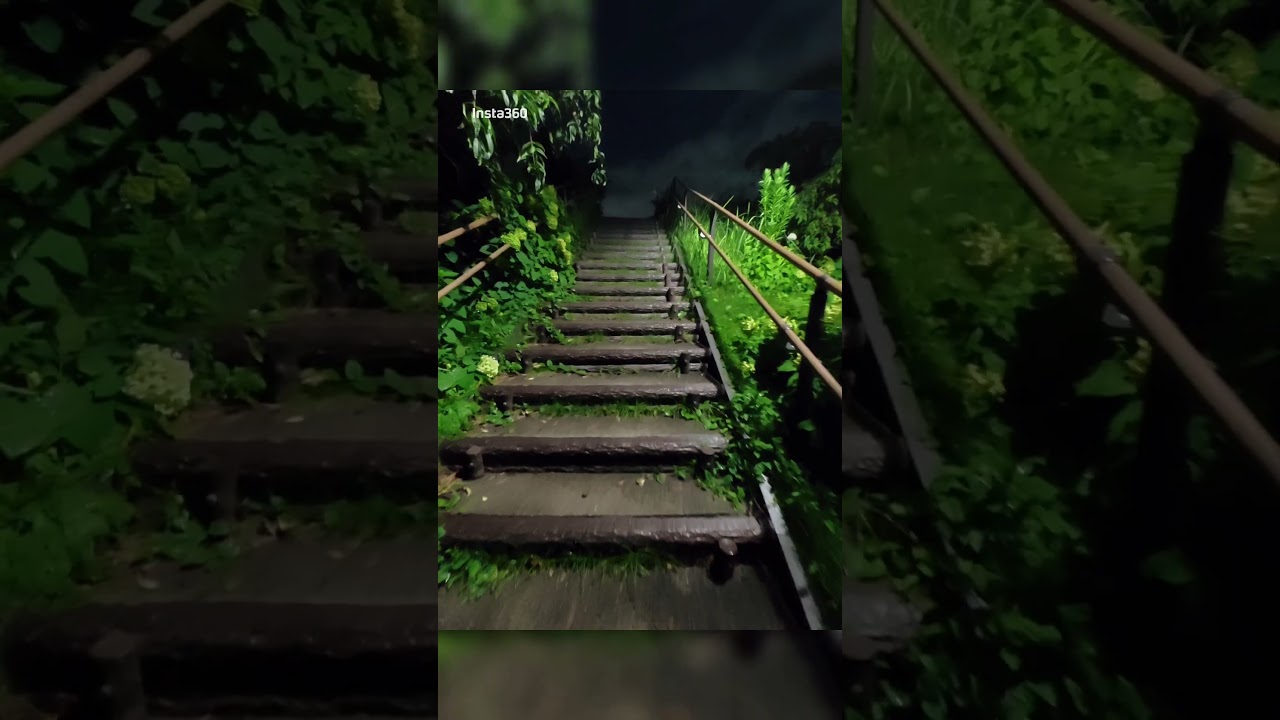
I took the camera out on a few walks in Tokyo after dark, and did a few recordings in properly dark environments. The footage is certainly decent, but again, no one should expect any compact camera, X6 or otherwise, to be able to give you the same results as a medium format camera.
The sensor size, albeit bigger, is still much smaller than larger cameras, which means the algorithm has to do the legwork to fill in the gaps where the sensor can’t. The results certainly look convincing on a smartphone’s screen, but the lack of light will always have an effect on the final results.
The fact that you can record something in the dark using the X6 is impressive, and if your main concern is capturing action in the dark, the X6 will do perfectly well.
Single-lens mode
Switching to single-lens mode turns the X6 into a more traditional action camera. It can record at up to 5K60fps, while the widest 170-degree field of view is available at 5K30fps. It can also shoot 4K120fps for slow-motion footage.
FlowState stabilisation and 360 Horizon Lock remain part of the package, with Insta360 claiming they keep footage smooth and level regardless of how the camera is moving.
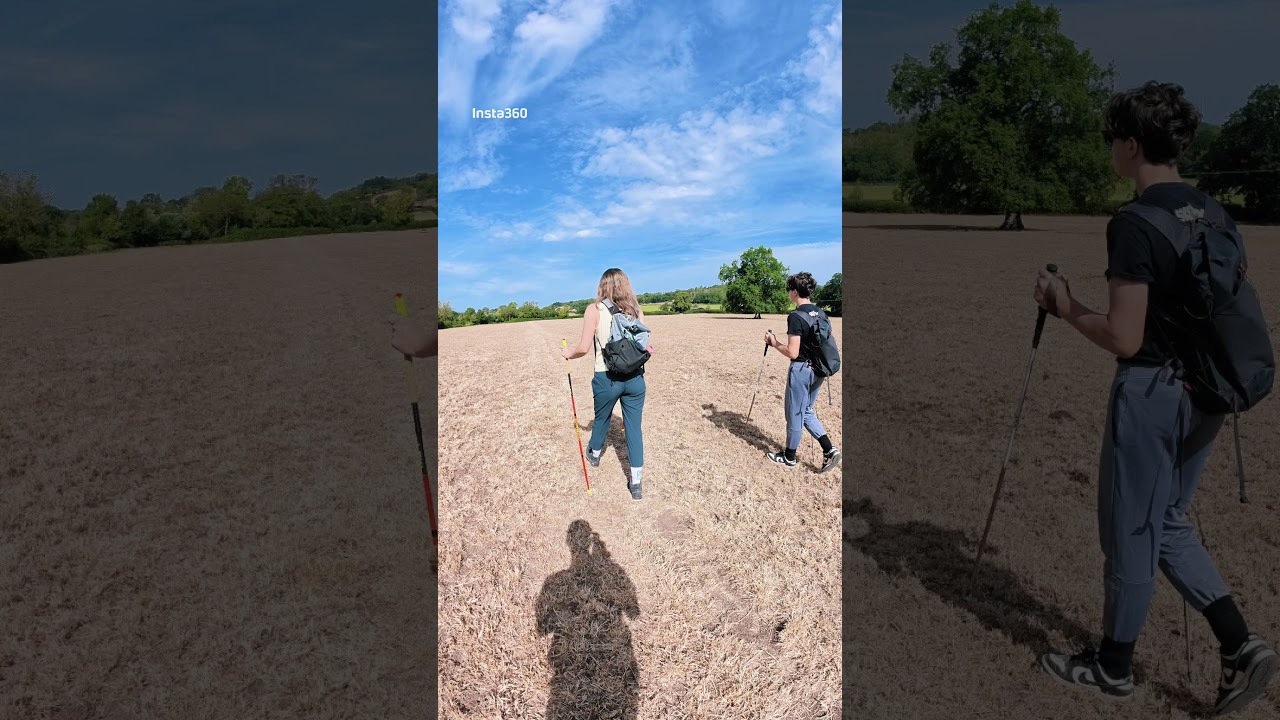
I used this mode the most, probably, as it removes the awkward process of trying to avoid stitched areas in post. The downside is, of course, framing, especially if you’re shooting footage vertically or horizontally. Mixing the two during the day would result in having Frankenstein-monster-style videos afterwards.
It certainly adds to the versatility of the camera, though, and the footage looks good, which is excellent.
Battery life and charging
The X6 uses a new 2,600mAh Xtreme Battery, with Insta360 claiming up to 140 minutes of recording at 8K30fps, a substantial 51% improvement over the X5. The battery is also designed to operate in temperatures as low as -20°C, while fast charging is claimed to take it from empty to 80% in 24 minutes.
Those figures held up remarkably well in my testing. I started recording continuously at 8K30fps with 97% battery remaining. After 50 minutes, the X6 was down to 66%. The internal memory filled at that point, so I deleted the footage and immediately restarted recording without giving the camera time to cool down.

Another 50 minutes took the battery from 65% to 30%. Again, I deleted the footage and carried straight on. The low-battery warning appeared after a further 25 minutes, with 10% remaining, and I eventually stopped recording after 135 minutes in total, when the battery reached 3%.
That's extremely close to Insta360's official 140-minute figure, particularly considering I started at 97% rather than fully charged. The X6 became hot during the test, as you'd expect after more than two hours of near-continuous 8K recording, but never became unbearably so.
Charging
Charging performance was equally impressive. Starting at 3%, I saw the X6 initially draw around 30W. It reached 70% after just 19 minutes, at which point charging power had dropped to around 15W before falling further to roughly 8W as the battery filled.
The camera reached 80% after 25 minutes, almost exactly matching Insta360's 24-minute claim from empty, and hit 100% in just over half an hour after I plugged the gadget in. In other words, my X6 went from 3% to fully charged in just 36 minutes. It became a little warm during the process, but nothing concerning.
Verdict
The Insta360 X6 is an impressive piece of technology. It is smaller than you might expect, tougher than before, lasts significantly longer on a charge and produces excellent-looking footage from a camera you can throw into situations where a conventional vlogging camera simply wouldn’t survive.
Its biggest strength is versatility. The X6 can be a 360-degree camera, a conventional action camera, a subject-tracking camera and, with the right accessories and shooting modes, something approaching a vlogging setup.

That versatility is also its main limitation. A camera designed specifically for one of those jobs will often do that job better. I prefer the Luna Ultra for straightforward vlogging, for example, while dedicated action cameras can offer a simpler shooting experience when all you want is conventional wide-angle footage. The X6 is at its best when you genuinely need several of those capabilities in one device.
There is also the familiar action-camera problem that no amount of processing or AI editing can completely solve: interesting technology cannot make boring footage interesting. The X6 can automatically find subjects, reframe clips and assemble edits far more intelligently than previous generations, but it still needs something worthwhile happening in front of the lenses.
None of that takes away from what Insta360 has achieved here. The X6 is expensive and arguably overkill for casual users, but as a rugged, highly capable camera for people who want to capture almost anything without carrying a bag full of kit, it is one of the most convincing do-it-all options available.
