What is Wi-Fi 8 and why does it matter? Plus the best cost-saving alternative to buy now
You can already buy Wi-Fi 8 – but TP-Link's Wi-Fi 7 router is a great alternative


There's a new Wi-Fi standard on the scene, and this time the upgrade is a little different to normal. Wi-Fi 8 (IEEE 802.11bn) is succeeding Wi-Fi 7 (IEEE 802.11be), but rather than focusing on speed boosts as we've seen in the past, the new protocol is more about improved reliability and efficiency.
In other words, with a Wi-Fi 8 router the signals will reach further and stay stronger around the edges of the device's range, and the network will be better able to handle multiple online gadgets and hardware simultaneously as they move around the home.
The idea is that no matter how crowded a Wi-Fi 8 network gets, it should still be able to serve up quick internet access to every device that wants a slice of online time. That doesn't mean raw speeds are going to be neglected, but they'll be similar to Wi-Fi 7, with the main upgrades coming in other areas.
A great Wi-Fi 7 alternative
Wi-Fi 8: when is it out?
Wi-Fi 8 hardware is already on the shelves, but the standard hasn't actually been finalised yet: that's expected to happen around May 2028, although there's no fixed date in that window. As usual, the Wi-Fi standard will ultimately be approved by the IEEE (Institute of Electrical and Electronics Engineers) Standards Board.
However, Wi-Fi 8 hardware is already appearing – that's because the latest draft version of the tech is close enough to completion for router manufacturers to dive in (it's been three years in the making), and Wi-Fi 8 chips are already available. Any future tweaks to Wi-Fi 8 can be applied via firmware updates to these routers.
At the moment, you've got the choice of investing in the Wi-Fi 8 future, or sticking with Wi-Fi 7 hardware that's going to be more affordable on the whole, and which will still last you for many years to come.
Wi-Fi 8: what can I buy?

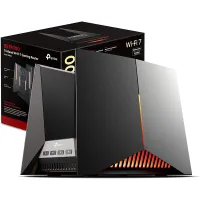
TP-Link is one of the first out of the gate with Wi-Fi 8 hardware, and its TP-Link Archer 8 Ultra router is now available to pre-order in the UK for £699.99.
When the official on-sale date arrives, that price point will increase to £899.99.
TP-Link is also preparing a Wi-Fi 8 Deco mesh system, due to be launched next year.
The Archer 8 Ultra will bless your home with overall speeds of up to 19 Gbps across three bands, with support for up to 200 devices, a limit you'll have a hard time reaching. There are also two 10 Gbps and four 2.5 Gbps Ethernet ports for even faster and more reliable wired connections to the web.
Bear in mind that any Wi-Fi 8 hardware is going to be backwards compatible with all the older Wi-Fi standards too – you're not going to suddenly cut off any older devices by upgrading to Wi-Fi 8.
It's also fair to say phones, laptops, and other gadgets will need to be Wi-Fi 8 compatible to make the most of a Wi-Fi 8 router, and so far we haven't seen any consumer Wi-Fi 8 devices appear. Qualcomm's latest Snapdragon chipsets do support Wi-Fi 8, so phones with the tech inside will start appearing sooner rather than later.
Wi-Fi 8: the key specs
Wi-Fi 8 sticks to the same 46Gbps maximum theoretical speed as Wi-Fi 7, though in reality the current hardware only goes up to 23Gbps – still way above the best home broadband at the moment. There's also the same 320MHz maximum channel width as before, and the same support for three bands (2.4GHz, 5GHz, and 6GHz).
The aim for the new Wi-Fi 8 standard is to improve throughput (the amount of data that can be pushed simultaneously) by 25% at the same signal quality, plus significant drops in terms of lag and packet drops – so, in practical terms, smoother video calls and fewer hiccups when devices join or leave the network, or move around a mesh network.
While you might be disappointed not to get a speed upgrade with Wi-Fi 8, bear in mind that you're still going to get much more than you need. As more and more devices adopt the standard, investing in a Wi-Fi 8 router will only become more appealing.
